
Showing posts with label soundtrack. Show all posts
Showing posts with label soundtrack. Show all posts
Monday, 19 October 2009
Martin Galway - Project Galway

Thursday, 15 October 2009
Vangelis - Blade Runner OST, Esper Edition (1982)

The remit is broad: Moog jazz/blues, grandiose synth compositions, Middle Eastern modes with uncanny synthesized bazaar orchestra...
For fans of the movie (if you haven't seen it go buy the tin box final cut edition or watch here, you mug) you'll appreciate the fact that this 320kbps bootleg includes everything from the geisha billboard music to Vangelis' spot-on speculation of what clubbers would be dancing to in 2019 dystopian Los Angeles. These tracks are possibly the best feature for me, the ones where the musical cues were never issued separately, so you still get to enjoy the subtle genius of the sound effects department: rain falling, wind chimes, etc. The bootleggers obviously made a conscious decision to extricate the dialogue track but keep in alot of these sounds, and they only serve to enhance the atmosphere.
Monday, 14 September 2009
the Seatbelts 'Cowboy Bebop' (1998)

Barmy genius OST to what is universally regarded as the best anime of all time and an awe-inspiring, big band jazz eclecto-workout. The Seatbelts were assembled by composer Yoko Kanno to perform and tour this much-loved soundtrack, which is a sublime retrospective of various pre-'65 jazz trends and much more besides. From the big city blues of 'Cosmos' and the Blade Runner-in-Africa synths of 'Space Lion'; to the ostentatious spectaculars 'Tank!' and 'Rush' - there is something for every palette... especially if you dig Charles Mingus. And be sure to hear each song out, they are prone to switching genre mid-jam. Has a big band ever been put through it's paces so much as the Seatbelts?
The ever-critical users of RYM have given it a 4.16 average out of 5 (that's in the top flight of popular votes), putting 'Cowboy Bebop' in eighth place for top albums of 1998. Behind...urgh... Neutral Milk Hotel? I never said they were a tasteful bunch...
As testified by many strangers to the anime show (watch it), the album is an easygoing and accesible standalone classic; but fans of show will also revel in the déjà vu and memories of the show - indubitably to be butchered and flogged for $$ in 2011 of course!
It's all a dream...
Saturday, 12 September 2009
Various Artists 'Samurai Champloo Music Record - Impression' (2004)

The ronin-themed hip-hop soundtrack thing is just a happy coincidence and after this it will definitely be out of the way, honest...
Recently I was tickled pink to discover that Shinichirō Watanabe (director of hands-down the greatest anime series of all time Cowboy Bebop) had completed another acclaimed series a few years back called Samurai Champloo, which maintained his propensity for fusing kinetic storytelling over approximately 26 episodes with purdy musiks - to spellbinding effect. And by fusing I mean the initially unholy, but soon completely natural marriage of Edo period Japan and, you guessed it, hip-hop. A historical revisionist take on the chanbara genre (there is an episode with beatboxers), like Bebop it raked in the glowing reviews for it's soundtrack of which several discs were released. 'Impression' is by far the strongest though so here it is.
The album is split into three parts, first third is produced by Japanese DJ duo Force of Nature, second by another Japanese producer of immense talent called Nujabes and the final part by brilliantly-named American DJ Fat Jon the Ample Soul Physician. The last track is an R&B song by a chick called Minmi, which actually wraps things up rather nicely. Except this one and the track listed in kanji 'Impression' is all instrumental glory, and it quickly becomes apparent that goood music is alive and well in Nippon. The track with vocals is obviously nonsensical to me, but it's surprising how the language actually survives the journey into Western musiks unmangled, and the meter isn't totally off kilter. I would never begin to try to deconstruct foreign language hip-hop, but I highly doubt it's as the internet says - that Japan doesn't have a significant black minority population and therefore has nothing to say. Apparently food is a hot topic... None of this is important!
The beats are fucking sick, so sick they will probably make you sick in your ears, and it just gets better as it goes along, like a snowball made of fucking sick. None of it suffers from OST out-of-context syndrome because it's just a bunch of appealing vomitus thrown haphazardly over the show, the soundtrack was probably written beforehand! While most tracks are in hip-hop tempo, there are tons of surprises, like 'Nightshift' being indistinguishable from funk (which is ironically where it all began) or funk with a drum quintet(?) on it. There's just an awful lot going on - particularly satisfying is some of Nujabes' loungy-jazz-cum-deep-house material and all of Fat Jon's Eastern-tinged stuff. Even raga gets a look in!
It's interesting to note that, judging by the Youtube viewing figures and the popularity of this album on sites like RYM, the show's soundtrack is something of a sleeper hit, and deservedly so. I will never use the word 'chillout' seriously in a sentence as long as Moby has breath in his body and the Tesco album charts thrive on lazy compilations for dull people, BUT elements of this album might be considered to have a therapeutic or relaxing quality on the heavy head. But it's got the aforementioned boom-bap, it's also cool, otherwise I wouldn't be posting it here would I because that wouldn't be a cool thing to do on my little blog would it? Just think about that. In all seriousness, in the strange and scattershot world of instrumental hip-hop, this is as good as it gets. This and the other albums I am posting.
On the Dee Elle
RZA 'Ghost Dog: The Way Of The Samurai' OST (1999)
Whilst DJs have been producing beats exclusively for MCs to spit over since the early 80's, hip-hop fashioned to be heard on its own is much less prevalent (it's yet to be truly recognised as a genre of its own) but has yielded some truly intriguing results. With the exception of a few groundbreaking cut & paste instrumentals and turntablism, non-specialist interest in 'just the beats' barely existed until the potential of hip-hop as a compositional tool was fully exploited by DJ Shadow's 'Entroducing...' album, the first album to be made entirely of sampled material (with a few seconds of interlude vocals recorded in studio).
Whether it be via breakbeats and crate-digging à la Shadow or just navigating the intricacies of beatmaking on a digital workstation, once (good) hip-hop producers are freed of the limitations of having to craft a foundation for raps they can (and do) tend to go a bit mad. Variations and changes that would not have been considered before are indulged, often morphing the track into something that could no longer be called conventional boom bap hip-hop or whatever. This is why 'instrumental hip-hop' does not have it's own section in digital or physical shops - it too diverse, often crossing the border into electronica, downtempo, industrial, trip-hop... in fact just about anything, as these uploads will hopefully demonstrate.
One of the musical vignettes from Ghost Dog (footage not from film)
I'd like to start with a master who is no stranger to a sequencer, and who's minimalist, kung-fu flick and Thelonious Monk-inspired beats were responsible for a renaissance in 1993. RZA (Ruler, Zig-Zag-Zig, Allah in the Five Percenter alphabet) was the mastermind, de-facto leader and producer of Staten Island, NYC's Wu-Tang Clan, a group who's hard-hitting sound once sold a hell of a lot of records but nowadays would be considered 'underground'. RZA's style must have been a revelation in the time of sluggish gangsta/Funky Drummer conscious hip-hop, every bit living up to the dark spiritualism and espionage tactics of Wu-Tang's lyrics. It sounds lo-fi, gritty and unique, whilst being extremely difficult to resist nodding your head to.
Since that initial period of success and the plethora of classic solo albums produced by Rizzer that followed, things started to tail off. The long-awaited sophomore Wu-Tang album in 1997 was an overstuffed double-disc beast, flawed but with plenty o-merit. The group however was in dissolution, and from this point on RZA turned more to live instrumentation and a pronounced 70's soul influence - whilst still crafting the occasional classic. He is nowadays more prolific and better known for his movie soundtrack work. 'Ghost Dog' was the beginning of that and it marks a one-off return to the sound that made RZA a household name and minor deity within hip-hop.
The cult movie is an understated Jim Jarmusch effort which I really recommend tracking down, and with his history of East-meets-West themes and beat-crafting there could not have been a more perfect choice to produce the music than Mr. Turkey Swizzler.
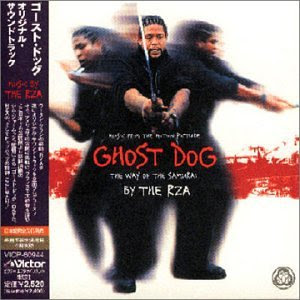 There were two soundtrack albums released, one was made up of RZA-produced rap tracks inspired by the film and released in North America (t'was so-so); the other was a Japan-only released and comprises of the much-vaunted score to the film, the excellent scratchy beats you hear throughout. In this upload I've also included a bunch of songs that weren't on the original release, like the music from the infamous Cold Lampin' scene among others, these are tagged on the end.
The score itself is like the protagonist of the film, subtle and cold on the job but warm and reflective in it's quieter moments. For the most part, this serves as a prime example of typical instrumental hip-hop (typical for the RZA at least), in that you'll never question what type of music you're listening to. There are some beautifully humble percussive pieces and acoustic effects which I can only assume were recorded live; and the few samples used are done so sparingly, with RZA's expressive keyboard work taking the 4.
Most of the tracks are short and don't outstay their welcome, but there is one big exception: the infuriating 'Opening Theme (Raise Your Swords)' at track 2. Mark my words and avoid that one and you will get along just fine this album. Now not to downplay the up-front quality of the beats, but you'll also find 'Ghost Dog' makes great background/night-time music to accompany most PG-rated activities, with it's unobtrusive rhythm and dusky atmosphere. For fans of the film, it even has the freestyle in the park as a nice little extra - what more could you ask for? Really? I'll end on a simple RZA quote I found, for anybody who somehow got through this entire entry and still thinks 'hip-hop' = Lil' Wayne.
''How has the South dominated hip-hop for the last four, five years without lyrics, without hip-hop culture really in their blood? Those brothers came out representing more of a stereotype of how black people are, and I think the media would rather see us as ignorant, crazy motherfuckers than seeing us as intelligent young men trying to rise and take care of ourselves.''
Pt. 1
Pt. 2
Wednesday, 2 September 2009
Ryuichi Sakamoto 'The Sheltering Sky' OST (1990)

''The Sheltering Sky is a 1949 novel by Paul Bowles. The story centers on Port and Kit Moresby, a married couple originally from New York who travel to the North African desert accompanied by their friend Tunner. The journey, initially an attempt by Port and Kit to resolve their marital difficulties, is quickly made fraught by the travelers' ignorance of the dangers that surround them. Time magazine included the novel in its 'TIME 100 Best English-language Novels from 1923 to 2005'.''
This is eminent maestro Ryuichi Sakamoto's soundtrack for the 1990 film adaptation starring John 'John' Malkovich. I've never seen this movie, so it's says something for the power of the music that I can enjoy the soundtrack without having any nostalgic connection to the images - it stands on it's own. In truth Sakamoto's orchestral score takes up about about two thirds of the album, the rest is Arabic music (traditional or otherwise), old swing, vintage French chanson - all stuff relevant to the film's setting and a perfect complement to the record. There are two so-so tracks by producer/arranger Richard Horowitz which are literally background music (albeit with some interesting field recordings of Morrocan women's voices from the 50's thrown in).
The meat of the record is of course in Sakamoto's compositions, which are amongst the best he's ever pulled off with an orchestra. One thing it's important to remember is that he has always had parallel careers - one as a modern classical composer and arranger of film scores, the other as a progressive electronic artist with an international bent -and he's somehow nary put a foot wrong in either field. This is quite an accomplishment considering ol' Sakky's been averaging, at least, an album a year since 1978.
So 'The Sheltering Sky' theme is all well and good, grandiose and sweeping as any of the great main themes of cinema, but it's the variations and expressive pieces within the score that are fascinating. Given what is (apparently) the content of the film it's hardly surprising that the music is by turns sorrowful and tender, dark and disturbing. The London Symphony never mucks about (nor should they with their union rates) and they realise the impressionistic Sakamoto score here beautifully. A couple of characteristic Sakamoto piano solos crop up too, this rendition of 'the Sheltering Sky' being one of his classic pieces.
On the whole then: the two 'sides' of the album - one romantic, the other an ethic pick n' mix - present an emotional spectrum you don't find on record all that often.
Get this is you are a soundtrack aficionado, a Sakamoto fan or if you are just looking for something out of the ordinary... In which case the first two conditions will soon apply to you.
D/L
Subscribe to:
Posts (Atom)


