Originally compiled for my friend Trix; a spiritual sequel to my 2007 'Teatime Psychotropics' compilation of transatlantic 1960s psychedelic pop. A few non-UK/US groups. Mostly obscurities. Goes from the baroque and whimsical to more garage rock-y in the second half. Contains the best cover of Tomorrow’s ‘Real Life Permanent Dream’ you will ever hear. Non-aficionados of the era should probably steer clear and listen to fucking Deerhunter or something.
1.Scarecrow’s Love Affair - Blues Magoos 2.Time Track - Skip Bifferty 3.Life Is Short - Billy Nicholls 4.What Does It Feel - The End 5.When The Alarm Clock Rings - Blossom Toes 6.The Birthday - The Idle Race 7.Yo Recuerdo Mi Mundo - Los Shakers 8.14 Hour Technicolour Dream - The Syn 9.Wake Up Cherylina - The Smoke 10.Real Life Permanent Dream - Orange Machine 11.Starvation - The Golden Dawn 12.Feathered Fish - The Sons Of Adam 13.The Letter - The Mops 14.Changing The Colors Of Life - Los Chijuas 15.All Night Stand - The Thoughts 16.99th Floor - The Moving Sidewalks
Resykld: Who would've thought the popularity of the Red Hot Chili Peppers (whom popular opinion holds to be a gaggle of gurning, shirtless Californian twats with a few conversely great LPs to their name) could be indirectly responsible for an album like this?: A home-recorded double album of avant-garde, dissonant demons ('92 & '94 respectively) by guitarist John Frusciante. This is up there with other shadow flowers like Oar and the Madcap Laughs, except even more abstract in its style. Whereas Skip's music was a schizophrenic mess and Syd was just shot-away, Frusciante is not of that generation, and through the 90's was an extremely reclusive, emaciated crack and heroin addict with his head tightly screwed on and free of whimsy.
The songs/instrumentals are warts-and-all, frequently detuned, almost ignore melody (but not really) and sound as if they were written/recorded on the spot, freeform. If this spontaneity was the method, Frusciante's four-track tape machine (my favourite recording tool incidentally - because it forces you to make the most of the little space available) captures and preserves these moments of torment uninhibited. These recordings do not answer to gravity, they have their own laws and operate in an emotional and musical vortex. If you have experienced such a vortex or are capable of stepping into one, then you will 'get' Niandra. And no, you don't need to enjoy his group work, Frusciante has his own muse.
Listening back to this album by a physically withered, disintegrating individual, it seems miraculous that Frusciante managed to emerge the other side of the 90's; and go on to use his considerable talents to forge a decent solo career... but he'll never write like this again. He escaped the vortex, stepped through a waterfall, and today explores a different kind of spirituality. For all their macho sex-funk and Hendrixising, the Chili Peppers' constituent members cite an eclectic range of greats for influence, and Frusciante would go on to make some excellent, introspective and ambitious music off the back of post-punk/new wave/krautrock obsessions. On Niandra however there is no trace of this later polish, it's a totally unique and isolated document - on its own planet musically and deeply personal, achieving a sort of metaphysical junkie plateau. The mistakes are left in, and anything resembling a pretty song is quickly ravaged with psychedelic tape effects and everything from tormented howls to banshee screams (made even more inhuman by occasional pitch-shifting). It's sad, ugly and beautiful. When he finally rejoined his old group in 1999, cleaned up, Frusciante had lost all his teeth to infection and received extensive skin grafts for needle abscesses. He also suffered severe burns after his crack den burned down. Ladies and gentlemen:
The finest psych-pop/double-concept LP to come out of 80's underground Britain, and certainly the best album ever made in Leicester. Crucially, the Chrysanthemums were a collaborative effort between two great unknowns: Terry Burrows (better known as Yukio Yung) and Alan Jenkins (he of Deep Freeze Mice and Cordelia Records); our beloved R. Stevie Moore is in there somewhere too - in fact it's the spirit of deadbroke musical ambition and penpal tape exchanges that glues it all together. That and the ever-amusing absurditastic lyricks. Alan Jenkins' weirdness and deadpan noo wave non-sequiturs are here in spades; and channeled through Yung's reliable pop know-how and eclecticism (his fascination with Japan and Germany has resulted in some top releases, some of which you'll find @ MutantSounds) give us the magnum opus from these sadly anonymous heroes. The only way it could possibly be any more perfect is if we got to hear Jenkins' befuddled croak, and you, as a music lover, are now obliged to blog search Deep Freeze Mice and have a good old nibble.
It's probably worth mentioning that in a brief GesichtBuch photo comments box exchange I had with Burrows (really), he expressed his dissatisfaction with the mastering of the album. And whilst it could certainly do with more range and punch, I think you will be too busy having your brain cells rearranged by the CD rip presented here to give a toss. A dearly beloved album in my collection, enjoy or die!
I say this often, but this time I've really got something special for yuz. Once upon a time, albums like this got to number 9 in the pop charts. I suspect it had something to do with the fading 60's counterculture - that era of cultural identity crisis, political activism and constant fear of nuclear holocaust... And the stoned white-blues pretenders that helped to herald heavy metal, of course. But Cream and Led Zeppelin this ain't, in fact Groundhogs were in a league of their own. Aside from the best album cover/title ever for what is first and foremost a leftist, anti-war concept album, stylistically the band were carving their own niche with this record which they would further explore on their next two albums Split and Who Will Save the World?. This very special sound falls somewhere between prog rock, hard rock, psychedelia and an advanced strain of blues, all delivered with the kind of raw production that (combined with the imagery in their artwork) no doubt played a large part in the Groundhogs being looked on today as somewhat 'proto-punk' - for their acknowledged influence on many first generation UK punk luminaries in this decade. A young Mark E. Smith was particularly smitten, and the Fall have covered the first track here 'Strangetown' (hear below), as well as 'Junkman' from the subsequent LP.
^sound quality's better in upload
So Thank Christ was a turning point for Tony McPhee (jaw-dropping guitar, vox) and co; having been a semi-successful blues band in various forms since '66 and earned their stripes, they were going down a path nairy travelled, opposed the cheesy machismo and studied wankology of their peers. Perhaps this was to their detriment financially (McPhee is conspicuously lacking in phoney Hall of Fame tokens of commercial achievement, when he should be remembered as one of the greats), but ultimately to those in the know, the classic run of albums speak for themselves as some of the most remarkably fresh and emotionally-charged rock albums you'll come across. At their best Groundhogs are not clawing to capture the blues with over-acted guitar solos; a world-weary fatigue just emanates naturally from the songs and playing technique, especially on this album. I've got time for the rest somewhere, don't get me wrong, but when you hear Groundhogs you'll just wonder what those other groups were playing at...
A snappy little two-album anthology of the ultimate psychedelic nostalgia here, as performed by Sir John Johns and his merry band of toytown travellers - better known as New Wave songwriting geniuses XTC.
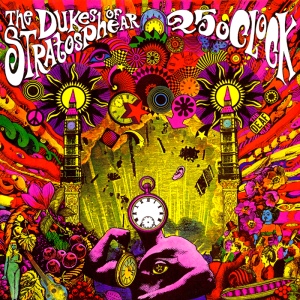
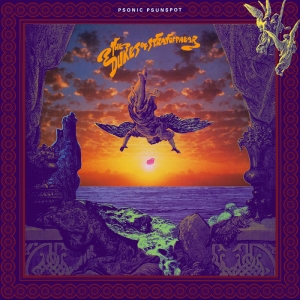
The neo-psychedelia tag is a misnomer really, seeing as the Dukes of Stratosphear's output was that of a loving tribute to the anni mirabiles of 1967 and 1968; no doubt the fruits of swollen record collections and weed-fuelled in-joking. Partridge & co's moment of indulgence is in fact so complete that were it not for the slight giveaway of John Leckie at the boards, one could be fooled in to believing the Dukes were a great obscure band of the psychedelic era, and no doubt this was their intention. Fans of that fertile period of ambitious songwriters will absolutely lap up this little experiment; it comes out as a seamless amalgam of all your favourite 60's drug music, at times sounding exactly like a lost Beatles album from between 'Sgt. Pepper's' and 'Magical Mystery Tour', at
others recalling the frenetic paranoia of the Pretty Things, or staples like Tomorrow and Art. The 1985 mini-album '25 O'Clock' is perfection and the '87 full-length 'Psonic Sunspot' literally has nothing wrong with it either - the only downside I can see is if you aren't all that fond of 60's psych, but then why the hell are you even breathing? Andy Partridge demonstrates a great ability throughout to mimic the clichéd effects and studio trickery of the era, whilst utilising his characteristic songwriting ability to keep things awesome. He has plenty of fun with the lyrics of course, the late 60's being one of the most ripe-for-parody in the history of pop. Special mention must go to 'Bike Ride to the Moon', which is like a tongue-in-cheek version of 'My White Bicycle': Why not bring a pot of tea / On a bike ride to the moon? / Angel cake for you and me / On a bike ride to the moon. What's not to like?
Within this multi-coloured tea chest lie nestled some of the best songs XTC recorded in the studio-only part of their career, in my redundant opinion. In short, I be your witch doctor and 'Chips From the Chocolate Fireball' is what I prescribes.
The Move. The Move, the Move, the Move. They were chart staples at one time, NME Poll Winners, and are clearly some sort of perfect cross-pollination of the Beatles, the Kinks and the Stones, yet how often do you hear them name-dropped these days? Not often. For shame, for shame, for shame. Not only do they contain elements of all those bands, throughout their existence moving from epic psychedelic pop to garage rock, but they were mixed better, with a more dyamic range than the tinniness/saturated warmth of the Four-Headed Monster. It certainly helps that this relatively recent and near-flawless compilation is all remastered.
60's eccentric auteur Roy Wood heads up proceedings. His former band the Idle Race(which also featured Jeff Lynne, who would join the Move in 1970 and with Wood later formed Electric Light Orchestra) are one of my faves, but like this band they start to lose my attention towards the end of their existence. This could be one of several things, it could be the move (HAHA) into mediocre hard rock territory, but it's more likely the departure of their first singer Carl Wayne, for whom I have a soft spot. And also the ouevre of Jeff Lynne irritates me slightly. Whatever. This compilation, however, is basically wall-to-wall greatness, and the music doesn't have the 'slighty dated symphonic-poodle disco nightmare' factor of ELO, which for me is a distinct boon. Let's just say the Move were cooler. I mean just WATCH.
^Ever felt socially alienated by your acid vizhunz? The Move have.And Carl thinks he's Elvis.
That is certainly their most covered song, but why aren't they more universally adored? Is it because they're from Birmingham? Huh?
Ladies and gentlemen, here is the ultimate radio bonanaza for the discerning 60's connoisseur; no matter how much you think you know you will learn something here. Psychedelia, garage bands, girl groups, beat, mod R&B, folk and blues - the whole bit.
The show is broadcast from Stockport, Cheshire (that's north west UK) and presented by the Mancunian Candidate aka Ben, in a highly endearing Mancunian brogue. He calls his listeners cellar dwellers and it's presented in a great no-frills, old skool British radio stylee. Just passion for music and light-hearted musical entertainment... I suspect Ben is spiritually not of this decade.
I was tuned out for a while but I returned to the show to discover Ben's aptitude for securing the most amazing and unlikely interviewees, including Gary Burger of the Monks. I'm posting this here because tomorrow he is interviewing Peter Daltrey from one of my favourite 60's groups - KALEIDOSCOPE. Need I say more?
The Cellar Tapes SATURDAYS
1pm - Los Angeles 4pm - New York 9pm - UK 10pm - Berlin
TUESDAYS (repeat)
12pm - Los Angeles 3pm - New York 8pm - UK 9pm - Berlin
Hugo Fattoruso - guitar/piano/harmonica/vocals Osvaldo Fattoruso - guitar/vocals Roberto 'Pelín' Capobianco - bass/backing vocals Carlos 'Caio' Vila - drums/backing vocals
Do yourself a favour and download this now, and listen while you read. Because this is a good one, a real diamond in the rough that was 60's international beat pop. By this I mean that, regrettably, there were very few non-Western groups of the the era that weren't direct cash-ins on Beatlemania, or the worldwide popularity of the Stones and the Kinks. Everything was carbon-copied from the 'four-headed monster' template: the haircuts, the songs (normally just making minor alterations to the chord sequences of the latest hit, if not just simply releasing no-frills cover versions), the teen exploitation movies, the 'cheeky' parent-baiting personalities... It doesn't sound too promising so far does it?
Similar to the Japanese 'Group Sounds' wave of commercial pop, South American groups were dragging the early 60's beat template well into the latter part of the decade, long after the fickle trendsetters in the US and UK had moved on. The band being presented here, Los Shakers, played rowdy beat pop and were modelled after the Fab Four, while their 'rivals' Los Mockers were Stones clones. That's not to say there weren't great original songs being produced in the region, or even a few classics albums (that I'm aware of), the most infamous example being Brazil's Os Mutantes. What made that album so great was the reappropriation of epic, psychedelic chamber pop with traditional music styles, making it a Sgt. Pepper's-inspired album that sounds totally Brazilian (this individuality, of course, earned them only the ire of the government).
^ This is Los Shakers' biggest garage-like hit from the 'Invasion' era, and the best example of their lasting legacy in 60's Latin beat... 'La Conferencia' doesn't sound like this, but I love this track as it lives up to their one-dimensional name.
So that's all very well, but in 1967 Los Shakers had also been listening to this Sgt. Pepper's, and like everyone else must have realised that things would never be the same again. This revolution came from the band that was their bread and butter, the very reason for their existence. They had to move on. By this time the Shakers had made their mark as leaders of the 'Uruguaryan Invasion' (which for some reason was mainly an Argentine phenomenon); and like the Monkees in America, they were a talented band on a commercial leash who were beginning to get itchy feet. The 1968 loose-concept extravaganza 'La Conferencia Secreta Del Toto's Bar' is the result. This is a ridiculously good high-pop album and a criminally overlooked world contender. Not only is it all the more respectable for incorporating Latin candombe and tango styles into the mix (yet still sung in English), but it's a huge leap from the restrictive beat formula they stuck to previously. Predictably, the EMI label execs couldn't see past their pay cheques, and dropped Los Shakers for not producing an LP of 3-minute hits. I'm sure if Los Shakers had stuck it out and waited for the Argentinian market to catch up, this might have been better received. Unfortunately it was not to be and this was their last album-proper.
It's all a bit mystifying, especially as to the modern listener every song on 'the Secret Conference of Toto's Bar' is instantly catchy. Sure, the first half of track one has a vocal line that sound uncomfortably like 'I Am the Walrus', but that's where the Beatles-hijacking of old ends. It may not be startlingly original, it may be sung in broken (but charming and comprehensible) English, and it may also be in the same symphonic ballpark as Sgt. Pepper's and Pet Sounds; but the songs more than speak for themselves and some real classics come to light. The band is easily as tight as those Other Guys, their harmonies are up their with the Wilson brigade, and their songwriting and composition skills didn't seem to suffer from a career languishing in pastiche. In fact, you'd swear they had been secretly practising for this moment all along...
Una descargar muy especial, incluyendo obras de arte!* @320kbps, remaster with (good) extra tracks UnoDos
*disclaimer: I don't speak Spanish. Please correct me.
Recycled from an old MeineSpace post, this needs sharing. I'm not the only person to post it but if it helps them get more listeners on Last.fm then what the hell...
Here we have an album that at it's worst is a historical curio and a comedy album; at it's best a world-class garage romp.
The Mops were, from what I've heard, the rawest and weirdest of Japan's sanitized 'Group Sounds' era. Group Sounds was a fusion of Western rock and Japanese popular music - which for the most part was melodramatic tripe and pretty much all manufactured, with creative control going to the record executives.
As with most Group Sounds bands they began as a Ventures-esque instrumental rock group, before taking on the mantle of drug-influenced blues and rock music emanating from overseas to become Japan's first bona fide psychedelic band. This was not the idea of the Yardbirds/Stones influenced group of course, it was the Mops' management who molded them into hippies as stipulated in their new record contract (see album cover).
However LSD was impossible to procure in Japan at the time and as well as putting on the most dazzling light shows to cement their psychedelic credentials (the other Group Sounds were catching on fast), the Mops would often play blindfolded to disorientate themselves.
So as well as being trippy dippy and lyrically darker than any Group Sounds band at the time ('please kill me' in the 6/8 time 'Blind Bird'), what does this alien interpretation of 60's vogue have to offer?
For a start I was struck by the garage influence, there's a lot of fuzzboxed guitar and it certainly packs a wallop; and when the Mops are in full swing (playing their own songs) the vibe is great too: Masaru Hoshi's perpetual, trebled guitar solos coming from somewhere off in space and the band keeping a frenetic groove under some brilliant freewheeling blues-psych.
^ Vintage pop cameo. Dig those ponchos!
All sounds good so far, non? But now I have to address the infamous cover versions of psych standards and the all-English vocals.
When the Mops are attacking these songs in their extremely bloken Engrish and their own inimitable style, it can work ('Somebody To Love' sounds great, singer/guitarist Yoshiro Hayakawa must have spent days getting the 'L' on 'love'); but the rest of the time you just can't help but giggle, and there are certainly a few comedy moments on the album such as the adorable ode 'San Franciscan Night'.
There is an element of humour when listening to this strange record, being as it is a heartfelt tribute to/cash-in on a Western pop culture... just totally naive and a lot of fun. None of this would matter if the songs weren't great. On the whole it's magnificently done, they manage to work in everything from harpsichords to a Misunderstood-style sense of doom - but there are some flaws. See: the inept sitar racket of 'Unforgettable Memory' and the musically competent but slightly comical covers of 'White Rabbit' and 'Light My Fire'. The pros far outweigh the cons though and it definitely belongs in your 60's collection.
Unfortunately when the album surfaced, Group Sounds was on it's last legs - Black Sabbath and Led Zeppelin were beginning to catch the attention of Japanese youth... The Mops were dropped =(
And this is where we leave our (magnificently named) heroes, who would cunningly move with the times and re-brand themselves 'New Rock'. It was left up to other, hairier bands to make history in this area...
Sources: Cope, Julian, 2007. Japrocksampler: How The Post-War Japanese Blew Their Minds On Rock 'n' Roll. 1st ed. London: Bloomsbury