Showing posts with label post-punk. Show all posts

Wednesday, 27 January 2010

Dalis Car 'The Waking Hour' (1984)

^A painting by Max Parrish, whose 'Daybreak' is the album's cover-art

A deeply unusual and beguiling one-off here (not me, the album). The delectable Peter Murphy of Bauhaus and multi-instrumentalist Mick Karn (ex-Japan) came together for this totally unique celebration of Middle Eastern modes and Paganistic themes; conjured almost entirely by complex, interwoven fretless bass and synth lines. With a number of exceptions, the fretless bass' sound can seem dated as it instantly recalls an era. But similar to the iconic and fluid basstones featured on Kate Bush albums from the period, it just feeds into the strangeness and in the case of Dalis Car, sets the scene.

Murphy was surely one of the classic post-Bowie New Wave singers, bold and brazen. Karn brings the dark, synth-based ruminations of Japan to the project. The programmed drums are barely noticeable and rendered almost superfluous beneath the album's mirage. This is far from simply Bauhaus meets Japan - it carves out a mystical exoticism, at a time when many artists of renown (Byrne, Gabriel, Eno etc) had recently succeeded in bringing the alien rhythms of various 'world'/ethnic musics into synthetic Western pop.

Dalis Car is pretty left of field however, being unsettlingly hypnotic and instrumentally upside-down. The minimalist approach to the compositions is fleshed out by excellent production and timely touches of distant guitar and woodwind. If you're a fan of the cold sounds of Talking Heads' Fear of Music, Bowie's Lodger, or the gothic New Age-isms of Dead Can Dance in general you can't afford to miss out on this.
BEWARE 'Cornwall Stone'.

the judgement is the mirror
1985 interview with Karn and Murphy


Tuesday, 29 December 2009

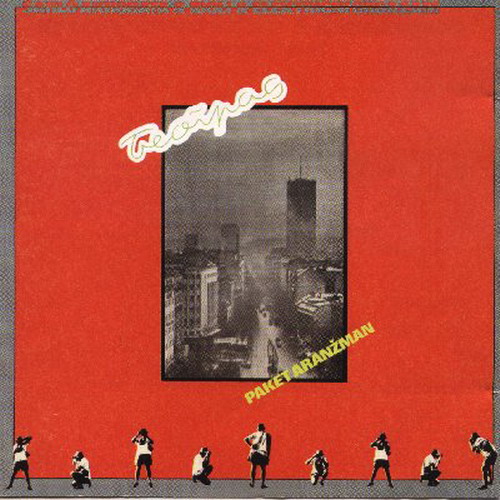
Various Artists 'Paket aranžman' (1980)


I love the energy of this album - it's taut and (I think it's safe to say) political like a lot of post-punk, but all the more worthwhile for the harsh social conditions under which it was produced. For all the gloom of the Eastern bloc, these groups sound like they were having fun, and the short but flawless career of Šarlo akrobata (of whom I am a big fan) exemplifies this: occasionally ska-inflected bursts of punk-inspired expression that would make for an interesting socio-historical study.
Šarlo clearly share their art school sensibilities with English contemporaries like Gang of Four, Wire et al; but if you had grown up in an environment shrouded behind the Iron Curtain, I think you might have more immediate priorities than artists in the 'free' world - who more often than not are met with a wall of conditioned ignorance or apathy. There is a sense that this is music that is truly reflecting a heavily oppressed generation that, having been spurred by the anarchic freedom of the punk movement, is struggling to not only free but to find itself and its role in this strange limbo-world.

This urgency in the music, occasionally tempered by bleak resignation, invokes all the usual Cold War imagery I somewhat romanticize in my head, so this little summary could only be positive coming from that perspective... And Paket aranžman is as perfect a snapshot of a time and place as one could hope for. However I think for the post-punk connoisseur and Europhile there is more to be had here. Only the three foremost Yugo Rock groups are featured, but they cover a lot of ground and only leave you dying to know what the lyrics are saying, particularly in Idoli's passive 'Amerika' (are they cynical, reverential?). The New Wave/Two Tone movements had obviously taken hold in Serbian record shops, the kids were doing the jerk to Costello, XTC, the Specials and producing music with the same tight rhythm sections and jagged guitars.

Here are some sample videos to help give you some idea of what these guys thought about life under leaders who were little more than Soviet puppets... note the mocking of Sov social realism in Idoli's Maljčiki video. SHOW PAPERS AT CHECKPOINT.


Sound wise, it's not 'lo-fi' in the conventional sense, some songs are endearingly ramshackle but no worse than a typical penniless Western group making do with a cheap studio. The difference here is that the music mattered. It mattered to a youth mired in the conflict and prejudices of their parent's/grandparent's generation - both Soviet and internal. It is scant comfort to know that things were only going to get worse - events of the ensuing decades would claim the lives of a few of the musicians featured on this record, including the drummer and frontman of Šarlo Akrobata.

Wiki:
'Paket aranžman is a New Wave music compilation album released in 1980 by Jugoton and is one of the most important and influential records ever made in the former Socialist Federal Republic of Yugoslavia. It features the eminent Belgrade artists: Šarlo akrobata, Električni orgazam and Idoli. Along with Novi Punk Val and Artistička radna akcija it is considered a symbol of the Yugoslav New Wave era and still has cult status in the countries that emerged after the breakup of Yugoslavia. The album was voted the second best Yugoslav rock album of all time by the critics. It is second only to Odbrana i poslednji dani by Idoli.'

LINK: http://www.mediafire.com/?2k2jzyyegur

Friday, 27 November 2009

Янка Дягилева 'Стыд и срам' (1991)


The definition of a 'lost' classic. Russian 'punk poet' Yanka Dyagileva's sorrow is beautiful and heartbreaking. The dissonant rumblings of cheap electric guitar introduced here on some tracks makes this, like all 'final statements', prophetically unhinged and disturbing. The foreknowledge of her spiralling depression, alcoholism and the increasing bleakness of her lyrics haunt the listener throughout.

This short album is bookended by painful exorcisms, 'Выше ноги от земли' and 'Придет вода'; both are lengthy songs with more than one passage, and both transmit an indescribable angst (especially if you don't speak Russian), although these titles should give you some idea: 'The Water Is Coming', 'Higher Than My Feet Above the Ground', 'Of Devils'...
Cracked lullabies, a recurring broken music box and an endearingly shambolic delivery reflect an innocence lost, never to be regained, and the sort of fatalistic, self-destructive philosophy that permeates the art of those under the Mighty Red Boot. We are even treated to a minute or so of Yanka's *swoon* spoken word and *gasp* an organ solo!

The title translates as Styd i Sram, or Shame and Reproach, and is Yanka's final self-released record before her suicide in Siberia, in 1991, within months of recording these songs.
In Soviet Russia you were simply not allowed access to studio facilities unless you were bland, state-authorised un-music. Yanka's vagrant lifestyle, travelling around Russia in collectives playing to the counterculture crowd, was the only means by which a dissenting artist could make themselves heard - at grassroots level. As such the Russian political folk underground was largely inspired by Bob Dylan and other Western minstrels, as well as rock 'n' roll and other impassioned forms of music that were frowned upon. Indeed, many of Yanka's contemporaries faced arrest without trial (and in some cases even torture) for their stance.

To those in the know, Стыд и срам is a punk-folk classic, although parallels could be drawn with the concurrent grunge and lo-fi scenes emerging in America. However none of those artists knew anything of the true tyranny, cultural suppression and hardship that Yanka did; and the melodies bear no resemblence to anything Western.

It's such a shame there has been no comprehensive translation of this bohemian heroine's lyricbook, as the folk-poet element is lost on non-Russian speakers... But if you are interested there are dribs and drabs of information, and all her home-recorded albums and bootlegs are free to download here: http://store.yanka.lenin.ru/mp3/Prodano!_89/

Shout to Proskynesis for introducing me to this a while ago.

Friday, 6 November 2009

Black Flag 'Who's Got the 10½?' (1985)


Purpose

Roll call:
Greg Ginn - Mahavishnu improv-punk, dissonant garrote strings
Henry Rollins - Banshee razor throat, vox of conscience
Kira Roessler - Bump buh bum bu bump buh, (see album title)
Anthony Martinez (RIP B. Stevenson) - machine gun allfiller/timekiller

One of me favourite albums (and a live one at that!) period, been meaning to share it f'some time. Ripped from CD (how quaint!). Rollins didn't write any of these songs, but he is on form here, spitting fire and making every lyric his own - if you know the guy you'll know that they might as well have been.
I can't think of any other bands who provoked this white-knuckle rapture of tight-wound, late-night sobriety and damning isolation. It's violent catharsis. A band where the guitarist plays lead and rhythm simultaneously!
True, the post-Damaged era of Sabbath/free jazz-inspired sludgecore yielded some seminal albums that would essentially be responsible for the grunge movement (as I and the 'key players' see it) and an anti-scene vision/work ethic that goes above and beyond the narrow strictures of 'punk' of early 80's west coast US; BUUUT one might argue that the muddy/downright awful/yet-to-be-remastered (come on Ginn, ya c*nt!) production on most of those albums never truly represented the explosive/implosive experience of LIVE Black Flag.

1984's live effort, their only truly inconsequential record, was an example of just about everything going pear-shaped as a recording and as a poorly-mixed slab o' Flag.
Black Flag lived on the road, they played anywhere anytime and, by all accounts, always delivered. A performance band, then. See the Youchoobs for prüf. They developed their sound on the road and through the cassettes played on the van's tape deck. In this van Ginn wrote his lyrics, which set up camp behind Rollins' increasingly misanthropic and punishing thousand-yard stare. They saw The Shit all over and they called it, that's the young man's duty.

And since the Flag were a band that worked more live than in any other medium, thank ___ they left us with a perfect snapshot of their final peak; before the as-yet unexplained animosity of Greg Ginn towards Rollins could sever an already frayed and exhausted relationship. Personally I suspect it was a clash between Ginn's psychotropic use (hear it in the music, the 70's influence) and Rollins' heart-of-stone sober focus. Ginn's music after Flag was, unsurprisingly, mainly jazz fusion guitar jams.

But here on 10½ we gots all the innovations of 80s Flag: the fucked-up time signatures, the anti-solos, fronted by a caged animal, ever-lengthening hair... and the ability to conjure a leaden heart in three chords like no other band on earth. These were never your average L.A. punk wasters. As for more contemporaneous influences they were in good company on Ginn's SST with post-punk expansionists Minutemen, Meat Puppets... you can hear the soundemolitions of their beloved Einstürzende Neubauten in here too.
The extensive setlist is not slim on the old anthemiklassix either - there's the customary freakout stoner jam (what better way to stick it to the skinheads?) and medley, you'll love it if you have ears and any small measure of righteous anger.
I could write endlessly about this record, its relevance to me personally, its meaning to other musicians and how BF were one of the few that 'rose above' (hurrrr) the surrounding pond life-smegma of La-La Swamp. Are you sick of the swamp and its revolting fumes? You aren't the only one. Join yourself!
Sunday, 4 October 2009

The Passage - Seedy: The Best of the Passage

The Passage were a post-punk Mancunian post-punk group, appearing on the impeccable Cherry Red label with a handful of albums and singles. Despite their brilliance, they continue to remain fairly obscure (currently less than 3,000 listeners on Last.fm) - I only had heard them when I was putting a post-punk box set together and had been recommended their stuff. Although there are certainly similarities between this group and contemporaries of the same scene, the difference with The Passage is that there is a certain standoffish sarcasm present that is uniquely theirs (comparable to the role The Cars served for new wave). Favorite tracks on *this compilation*, Seedy: The Best of the Passage, are "Carnal", "Devils and Angels", "Armour", and "Drugface" (sampled by Moby, apparently).

Tuesday, 11 August 2009

Danielle Dax - Comatose Non-Reaction (1990) + "Tomorrow Never Knows" Single (1990)

When I was around 14, I started going through all my parents' albums I hadn't heard before, and Danielle Dax's Dark Adapted Eye (1988 compilation; it finally went back in print in late 2008!) was one that grabbed my attention most. Up to that point, I'd never heard anything quite like that album, with its strange mix of ethnic, often tribal, sounds, the spooky and vaguely psychedelic, and even country-western motifs, showcasing Dax's diverse and impressive vocal and instrumental abilities. Upon investigating whether there was more material, I found that not only was almost everything of hers out of print, but that she's remained incredibly obscure overall (currently with just around 5,000 listeners and, sadly, nothing streamable at Last.fm), which is quite inexplicable, since she has at least the chops of Siouxsie Sioux, more than enough of Kate Bush's quirky madness, and a strong injection of mysticism. I managed to also track down a copy of Blast the Human Flower (1990) a few years ago at Amoeba Records in San Francisco, and scrounged around for her myriad of other releases on the interwebs Apart from the two out-of-print items I'm offering below, her other releases are available via this post at j's heaven [for Jesus Egg That Wept (1984), Blast the Human Flower, and Inky Bloaters (1987)], *here* for Dark Adapted Eye (particularly recommended!) *here* for the Timber Tongue EP (1995; the title track includes a sample from Faust's "Just a Second (Starts Like That)"!) and *here* for Pop-Eyes (1983; this was her first release, entirely self-made and produced).

Prior to her solo endeavors, she was half of the bizarre experimental group Lemon Kittens (see also 1980 EP Cake Beast, also two additional EPs are at mysteryposter), with other half Karl Blake going on to form the Shock Headed Peters and later returning to collaborate with Dax again. Her last solo output was the aforementioned Timber Tongue EP all the way back in 1995, though she collaborated with the equally odd Andrew Liles on his 2008 album Ouarda (The Subtle Art of Phyllorhodomancy) on a few tracks. Apart from being featured on several of Sire's Just Say Yes compilations and apparently permanent cult status, Dax has gotten far less respect than what she deserves for her innovative, and incredibly still-unique works of musical artistry- now's your chance to get in on the secret!

The appropriately-titled Comatose Non-Reaction: The Thwarted Pop Career of Danielle Dax collects some of her singles and notable songs, as well as some tracks unavailable on any other collection, and serves as a good introduction:
Comatose Non-Reaction - Disc 1
- Disc 2
---
Her cover of The Beatles' "Tomorrow Never Knows" is featured on her '90 album Blast the Human Flower, and the single includes both the single and album mixes, "King Crack", and two otherwise unavailable remixes:
Tomorrow Never Knows (Single)

The music video for the track is below:

Wednesday, 29 July 2009

Klaus Mitffoch - Klaus Mitffoch (1984)

Lech Jaierka - bass/vocals (went on to a long solo career)
Krzysztof Pociecha - guitar/backing vocals
Wiesław Mrozik - guitar/backing vocals
Marek Puchała - drums/backing vocals


Since I am primarily of Polish descent, a mind-bendingly good Polish album is something I hold very dear. And in case you needed reminding, the flourishing generation of Polish musicians in the wake of punk all created under (and were frequently censored by) the vigilant policing of the Soviet Union, which by this point was losing it's tenuous grip on Eastern Europe. There is a lot of great music from Cold War Europe, which will find it's way on to this blog, but I consider the sole album by Klaus Mitffoch to be one of the best.

Wikipedia cites Klaus Mitffoch as being Poland's answer to Gang of Four, and while the influence is obvious and welcomed it just doesn't do them justice. (And remember this is before a GoF influence constituted the lame-dicked, chart-topping dirge of the media's 'post-punk revivial' in the early Noughties).
Klaus Mittffoch, as the song 'Nie jestem z nikim' states, are not with anyone, and display a quality that Gang of Four and, understandably, most of their Polish peers did not possess - a sense of humour and playfulness. The album might broadly be described as the ultimate collage of new wave/cold wave (the icy synth-led European equivalent) madness with occasional progressive tendencies... well it might and it just has!
Every song is packed with hooks delivered at outta-my-way speed, but just when you think you have them pegged Klaus Mitffoch will rein it in and deliver a glacial classic like some twisted interpretation of Magazine's 'Permafrost', or make an unexpected timechange. But they rarely slow down enough to stop barking profound-sounding slogans that I am shamefully ill-equipped to interpret.


^This is a good example although there are better songs - it starts out very 'Gang', goes coldwave in the chorus then has a funny bridge.

The band don't want you to take them too seriously either, there are some weird near-psychedelic passages and unexpected flourishes that persist in shaking things up. And unlike much 'cold wave', the production never feels like it's indulging it's own sense of hopelessness, in fact the clean and compressed effects are used as tools for Klaus Mitffoch's own nefarious ends, and only serve to shine a light on their playing ability (I'm sure some digging would reveal they were a jazz fusion outfit in the 70's or something).

This new upload originally came from the sterling Proskynesis blog which is a real treasure trove, go visit, and download the 'Fala' compilation if you want to get to the bedrock of Polish post-punk. The strange logic behind this repeat upload is something along the lines of: EVERYBODYMUSTHEARTHISNOW.

Now as the man says, 'have a nice day and go fuck yourself'.

Jestem tu jestem tam / here I am here I am

Januscz x

Saturday, 25 July 2009

The Fall - Fall In A Hole (1983)

^Click to enlarge. Awkard New Zealand 'zine interview

The third live album here, for you trainspotting Fallites. Recorded on the August, 1982 NZ leg in Auckland, Christchurch and Wellington respectively. Back when I posted Totale's Turns I claimed that it was the best Fall live album (by definition one of the greatest live albums ever), and 'Fall In A Hole' only narrowly fails to top it. But if TT, with it's dictaphone-in-the-audience, anti-punk recording quality, was too much for you to stomach, then you'll love the comparatively clear fidelity on this.

There's yet another 'best line-up ever' documented here, the almighty double-drumkit powerhouse of repute and myth, playing all the 'hits' from the sonic riot that is the Hex Enduction era. The remaster is excellent, with depth as well as volume to the sound, a whole disc of extra tracks which essentially just turn this into a double album, and I have included scans of the well-worth-reading Sanctuary liner notes.

'Fall In A Hole', which as you are listening might as well be one continuous wet-dream of a Fall set, positively crackles with malevolent garage oomph showcasing the band for what they were and still are 27 years later under Smith's guidance - a great live band. My credentials only extend to one gig at the Oxford Zodiac for the Fall Head Roll tour, but recent footage doesn't disappoint, they still play LOUD.
I imagine one would have been similarly blown away by hearing the Monks in a dank German club in the mid-60's. But listen to this and just bear in mind: this is 1982, this is Culture Club, Bucks Fizz, the rise of 'popular capitalism' and buckets of yuppie wank.
And here were a band commanding your attention with social-surrealist poetry barked over driving, post-industrial, Can-like anti-grooves played at 'ilevin', with all the conviction of a Group completely and utterly Alone. Brilliant.

Pink
Press
Threat (art)

Tuesday, 21 July 2009

Nostalgics 01


Now and again 1979's 'Metal Box' resurfaces from the murky depths of a Mariana trench that is permanently etched into my psyche. It was always an obsession but I don't think this trench was dug until the day I played the album on a pair of hand-me-down standing speakers, a bargain from my flatmate, and first cautiously turned up the bass dial on the amplifier. It was the same dial that brought roots and dub to life via the Trojan Dub Box and Super Ape.


This is all the more significant since honourary rasta John Lydon met many of the artists on those records himself on his infamous trip to Jamaica, before returning to record the first two PiL albums. I have a recollection of an anecdote from the Lydon autobiography, essentially recounting how he and the great Don Letts went to an authentic soundsystem dance in a rough part of Kingston. Within a few tokes of powerful Jamaican skunk these Eastenders were unaccustomed to, they fell unconscious under a palm tree, carried on the sub-bass. They awoke to find the performers, the crowd and all the equipment gone! For some reason it's a powerful and soothing image, whenever I recall it it's as if I were there myself...

It's 'Metal Box' though that takes the dub template to new spaces and fuses it with experimental German rhythms, among other things. I will post it someday, hopefully when it is remastered, because in many ways it's my favourite record. 'Poptones' is about a kidnapping/murder, I am guessing.

Drive to the forest in a Japanese car
The smell of rubber on country tar

Hindsight does me no good

Standing naked in this back of the woods

The cassette played Poptones

Can't forget the impression you made

Left a hole in the back of my head

I don't like hiding in this foliage and peat

It's wet and I'm losing my body heat

The cassette played poptones.
Miss bleeding heart
Looking for bodies
Nearly injured my pride

Praise picnicking in the British countryside.

Saturday, 2 February 2008

Henry's Phonograph - Standing In the Way of Progess

Art by Freddie Tyson-Brown (LOOK)
www.myspace.com/henrysphonograph

Disbanded (temporarily?) and much missed.


These chaps released one 10-track mini-album during their 4-year unsigned tenure on the Dorset scene: 'Standing in the Way of Progress' - a 4-track tape recording bursting at the seams.


Prodigious, idiosyncratic and political, they would have thrived in a post-industrial, Cold War-comedown psych-scape.


The curious, questioning and experimental heart of pop music lives on through records like this.


Henry's Phonograph -
Standing In the Way of Progress(mediafire link)
1 She Said: 'Live In the Now!''
2 The BBC Took My Baby Away
3 U.S. Empire
4 Purchase, Purchase, Die
5 Interlude
6 Untitled Anthem
7 I Meant To Kill Him
8 Meier's Trumpets
9 Bullet Wound Blues
10 So I Went Home And Listened To Led Zeppelin


'Girl I Want You, Dead' (Unfortunately I was so baked when I saw this
amazing set I couldn't stand up, luckily for posterity someone filmed)


'Sex, We've Got You Now' at the Overtoom 301, Amsterdam