Sunday, 16 August 2009

What do you MEAN you've never heard...

Rage Against the Machine??

Their 1992 self-titled debut is surely a musical rites of passage for teenagers everywhere - I've met surprisingly few people who didn't grow up with this album. Tom Morello and the band's relentless alt.metal riffage assault must work in tandem with the most explicitly anti-authority lyrics any 14-year-old was/is likely to come across. So RATM was the perfect hormonal release, and at that age not much thought went in to the Zack De La Rocha's words beyond 'shit, he's got some problems too...'. It's funny, because in school this was the only music anybody could universally agree on, it spoke to that barely-suppressed torrent of teenage angst. Kids had problems with bullies, parents, puberty, and this album always did the trick - people went mental when RATM came on.
So what can I say about this album in the 'sober light' of adulthood? Hmm. It's been a good few years. It gives me kicks of a different sort now, which manifest themselves in much the same way - hyperactivity and indignation. I've come full circle in terms of my worldview and, this being something of a manifesto of left-wing sloganeering clearly written to be screamed on the street, RATM ticks all the right boxes. One can't escape the knowledge that this debut album (at the very least) should have been de-licensed for free distribution amongst the populace once the group broke up, but it hasn't been. Hopefully this full-quality download (with artwork scans) will make a notch in some blowhard bank accounts... yeah, right!

So you've got the rage there, clearly. Rage against capitalism, exploitation, suppression, greed, religion, inequality and the general population's booze 'n' lard-fed apathy in the face of it all. It's a direct challenge to mainstream beliefs of the time (and now); very much a product of the disillusioned underground swell that bubbled under the surface of Reaganite Bullshit America. Bill Hicks spoke to that youth with comedy and reason, Rage with music and reason.
And musically? Sure, RATM almost single-handedly kicked off the vogue for rap-metal as a means of delivery, and this might understandably send retrospective shudders at that culmination of hip-hop's influence on metal: 'nu-metal'. But nu-metal this ain't. This is the best underground hardcore punk and metal of the 80's, condensed, fed through a Jimmy Page cookie cutter for catchy-ass riffs, and infused with the political activism of Public Enemy. Morello's guitar is more 'metal' on this, but shows early signs of the hip-hop/electronic sound it would later assume, and the occasional flourishes of slap bass are rather anachronous... but all is forgiven as it's heavy as fuck and never misses a step. RATM doesn't pretend to be the answer all wrapped up in a neat little package, but it's such a forceful and compelling wake-up call you'd need to be completely beyond the McPale to not sit up and listen.

If you missed out on jumping around a room and throwing chairs to 'Killing In the Name's final refrain (you'll see what I mean), then you should jump on board right now and see what you done missed. And don't pretend you're too highbrow for it, because we both see through that smokescreen. Testosterone booster strictly optional.

Download
Origins of the artwork
Bonus wisdom

Saturday, 15 August 2009

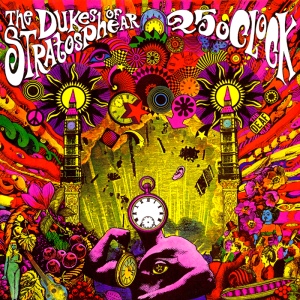
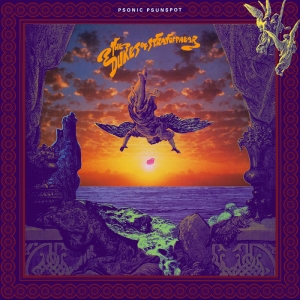
the Dukes of Statosphear - Chips From the Chocolate Fireball Anthology (1985-87)


A snappy little two-album anthology of the ultimate psychedelic nostalgia here, as performed by Sir John Johns and his merry band of toytown travellers - better known as New Wave songwriting geniuses XTC.

The neo-psychedelia tag is a misnomer really, seeing as the Dukes of Stratosphear's output was that of a loving tribute to the anni mirabiles of 1967 and 1968; no doubt the fruits of swollen record collections and weed-fuelled in-joking. Partridge & co's moment of indulgence is in fact so complete that were it not for the slight giveaway of John Leckie at the boards, one could be fooled in to believing the Dukes were a great obscure band of the psychedelic era, and no doubt this was their intention.
Fans of that fertile period of ambitious songwriters will absolutely lap up this little experiment; it comes out as a seamless amalgam of all your favourite 60's drug music, at times sounding exactly like a lost Beatles album from between 'Sgt. Pepper's' and 'Magical Mystery Tour', at

others recalling the frenetic paranoia of the Pretty Things, or staples like Tomorrow and Art. The 1985 mini-album '25 O'Clock' is perfection and the '87 full-length 'Psonic Sunspot' literally has nothing wrong with it either - the only downside I can see is if you aren't all that fond of 60's psych, but then why the hell are you even breathing?
Andy Partridge demonstrates a great ability throughout to mimic the clichéd effects and studio trickery of the era, whilst utilising his characteristic songwriting ability to keep things awesome. He has plenty of fun with the lyrics of course, the late 60's being one of the most ripe-for-parody in the history of pop. Special mention must go to 'Bike Ride to the Moon', which is like a tongue-in-cheek version of 'My White Bicycle':
Why not bring a pot of tea / On a bike ride to the moon? /
Angel cake for you and me / On a bike ride to the moon
.
What's not to like?

Within this multi-coloured tea chest lie nestled some of the best songs XTC recorded in the studio-only part of their career, in my redundant opinion. In short, I be your witch doctor and 'Chips From the Chocolate Fireball' is what I prescribes.

Friday, 14 August 2009

John Coltrane - A Love Supreme (1965)

Whilst it's immensely difficult not to regurgitate a puddle of wiki accolades about 'A Love Soup-Ream' being 'generally regarded' as this and that; it's NOT immensely difficult to tell you that this is the best (well, one of the top three interchangeable) jazz, if-not-just-album albums of all time. This is what ALL jazz should have sounded like by 1965. Coltrane by this point had dropped hard-bop like a bad smell, a regime where the improvisation was restricted to the chord changes within a tune.
ALS is, according to a certain source, modal jazz. I am a layman but even I can tell this is so, with my lugholes. Modal jazz was like the next step to the misleadingly-named free jazz (aka musical masturbation) that Coltrane would spend the last few years of his life exploring. Since this form is often not completely 'free', let's just call it avant-garde jazz. Anyway, ALS only skirts this territory, and is a culmination of the new freedom that improvising within modes allowed. This requires great skill on the part of the soloists, since you have to know your scales and be really quite ingenious to come up with something as timeless as the Coltrane Quartet did here. Coltrane had been testing this methodology since at least 'Giant Steps' (a fringes be-bop classic that I'll upload), but on here you will notice a marked difference to those oldies. Recording this album, one of the greatest saxophonists of all time still had his audience foremost in mind, and that's why Coltrane spares us an outdated form of improvisation without disappearing completely up his own arse.

John is the bandleader of course, and in case you hadn't worked it out, plays tenor saxophone. The rest of the quartet for this beast of a session runs as follows:
Jimmy Garrison - double bass
Evlin Jones - drums
McCoy Tyner - piano

This is a no-frills 320kbps upload, remastered but minus the tiresome five discs of 'bonus' material ('ooh an alternate take! WOW').
If I can practically hum the entire four-part suite of this album from memory, then it's well within the realms of possiblity that other people will enjoy it.

Only known performance of 'A Love Supreme'. Hardly any footage survived, and it was apparently more dissonant that the LP rendition.

Thursday, 13 August 2009

Lives of Angels - Elevator to Eden (1986)

Though Lives of Angels are were associated more with minimal synth/coldwave (I did discover them when I was on my coldwave quest, after all), there are readily apparent psychedelic elements as well, which makes for an unusual, unique sound. Their only LP was 1986 release Elevator to Eden, which appears to be hopelessly out-of-print, and all current linkage is corrupt or dead...until now! (recommended if you like Joy Division / New Order, Siglo XX, the So Young But So Cold compilation, Blank Dogs, and so forth):

Elevator to Eden (obscurity level: super-high - just around 200 listeners on Last.fm!)

They also appeared on 1988 compilation Colour Supplement (which you can grab at MUTANT SOUNDS) with three tracks that are absent from their one album, along with songs from Modern Art, Mystery Plane, and WeR7, and their MySpace Music page contains some more recent recordings.

Tuesday, 11 August 2009

Danielle Dax - Comatose Non-Reaction (1990) + "Tomorrow Never Knows" Single (1990)

When I was around 14, I started going through all my parents' albums I hadn't heard before, and Danielle Dax's Dark Adapted Eye (1988 compilation; it finally went back in print in late 2008!) was one that grabbed my attention most. Up to that point, I'd never heard anything quite like that album, with its strange mix of ethnic, often tribal, sounds, the spooky and vaguely psychedelic, and even country-western motifs, showcasing Dax's diverse and impressive vocal and instrumental abilities. Upon investigating whether there was more material, I found that not only was almost everything of hers out of print, but that she's remained incredibly obscure overall (currently with just around 5,000 listeners and, sadly, nothing streamable at Last.fm), which is quite inexplicable, since she has at least the chops of Siouxsie Sioux, more than enough of Kate Bush's quirky madness, and a strong injection of mysticism. I managed to also track down a copy of Blast the Human Flower (1990) a few years ago at Amoeba Records in San Francisco, and scrounged around for her myriad of other releases on the interwebs Apart from the two out-of-print items I'm offering below, her other releases are available via this post at j's heaven [for Jesus Egg That Wept (1984), Blast the Human Flower, and Inky Bloaters (1987)], *here* for Dark Adapted Eye (particularly recommended!) *here* for the Timber Tongue EP (1995; the title track includes a sample from Faust's "Just a Second (Starts Like That)"!) and *here* for Pop-Eyes (1983; this was her first release, entirely self-made and produced).

Prior to her solo endeavors, she was half of the bizarre experimental group Lemon Kittens (see also 1980 EP Cake Beast, also two additional EPs are at mysteryposter), with other half Karl Blake going on to form the Shock Headed Peters and later returning to collaborate with Dax again. Her last solo output was the aforementioned Timber Tongue EP all the way back in 1995, though she collaborated with the equally odd Andrew Liles on his 2008 album Ouarda (The Subtle Art of Phyllorhodomancy) on a few tracks. Apart from being featured on several of Sire's Just Say Yes compilations and apparently permanent cult status, Dax has gotten far less respect than what she deserves for her innovative, and incredibly still-unique works of musical artistry- now's your chance to get in on the secret!

The appropriately-titled Comatose Non-Reaction: The Thwarted Pop Career of Danielle Dax collects some of her singles and notable songs, as well as some tracks unavailable on any other collection, and serves as a good introduction:
Comatose Non-Reaction - Disc 1
- Disc 2
---
Her cover of The Beatles' "Tomorrow Never Knows" is featured on her '90 album Blast the Human Flower, and the single includes both the single and album mixes, "King Crack", and two otherwise unavailable remixes:
Tomorrow Never Knows (Single)

The music video for the track is below:

Monday, 10 August 2009

the Move - Very Best of the Move (1967-72)

The Move. The Move, the Move, the Move. They were chart staples at one time, NME Poll Winners, and are clearly some sort of perfect cross-pollination of the Beatles, the Kinks and the Stones, yet how often do you hear them name-dropped these days? Not often. For shame, for shame, for shame. Not only do they contain elements of all those bands, throughout their existence moving from epic psychedelic pop to garage rock, but they were mixed better, with a more dyamic range than the tinniness/saturated warmth of the Four-Headed Monster. It certainly helps that this relatively recent and near-flawless compilation is all remastered.

60's eccentric auteur Roy Wood heads up proceedings. His former band the Idle Race (which also featured Jeff Lynne, who would join the Move in 1970 and with Wood later formed Electric Light Orchestra) are one of my faves, but like this band they start to lose my attention towards the end of their existence. This could be one of several things, it could be the move (HAHA) into mediocre hard rock territory, but it's more likely the departure of their first singer Carl Wayne, for whom I have a soft spot. And also the ouevre of Jeff Lynne irritates me slightly. Whatever.
This compilation, however, is basically wall-to-wall greatness, and the music doesn't have the 'slighty dated symphonic-poodle disco nightmare' factor of ELO, which for me is a distinct boon. Let's just say the Move were cooler. I mean just WATCH.


^Ever felt socially alienated by your acid vizhunz? The Move have.
And Carl thinks he's Elvis.

That is certainly their most covered song, but why aren't they more universally adored? Is it because they're from Birmingham? Huh?

Brummies do it better (ripped@AMAZING)

Art: Treat Yourself to the Best


http://treatyourselftothebest.blogspot.com/
Very special blog that covers all artistic aspects of life, with lots of amazing high-res images, films and tidbits, a great deal of which I imagine they upload themselves. Subscribe to it. Recently a big post on the art-as-science of Czech genius Nikola Tesla, my FAVORITT. Well, well, well worth your time.