Tuesday, 18 August 2009

BBC Radiophonic Workshop - Music From the BBC Radiophonic Workshop (2003)


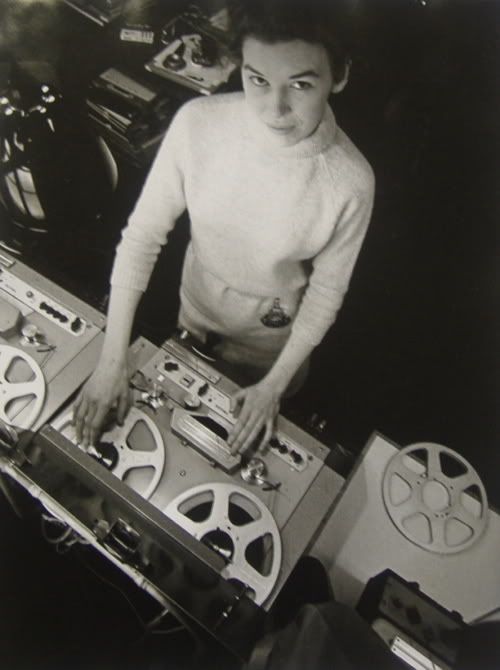
Having compared the subject of my previous post to electronic composer Delia Derbyshire on more than one occasion, I thought it would be good to follow through and let people know just who the hell I was talking about.

The late Ms. Derbyshire was first attached to the BBC's 'Radiophonic Workshop' in the early 60's, along with other drug-free young talent like Brian Hodgson and John Baker. The Workshop was a venture that, over four decades, became the BBC's very own in-house music and sound effects unit; producting for an extensive range of radio and television programming, as well as acting as an alternative to the expensive practive of music licensing.

From it's early days the Workshop was a hotbed for 'budget experimentation' that sought to make soundtracks and create a library of BBC sound effects, without having to hire orchestras and freelance composers. It was a coming together of maths/physics PhDs, BBC jobsworths and hundreds of miles of magnetic tape; the results were some of the most otherwordly and prescient electronic music of the twentieth century.

46 years on, the Workshop's biggest achievement in the public eye still remains the supremely weird proto-techno of the Doctor Who theme, and with good reason. It's hard to believe when you hear it, but this was made before the rise of polyphonic synthesizers (although oscillators are put to good use here); with Derbyshire actually taking Ron Grainer's original composition and realizing it in the manner that would become a signature of the Workshop - manipulating and splicing pieces of analogue tape by hand. The recordings being (literally) cutted & pasted were typically single tones made by instruments or, most commonly, 'found sounds' (bottles, bicycle wheels, anything goes). This approach must have been spurred on by the musique concrete avant-garde of the time... In the 60's at least, the Workshop very much reflects a playful spirit of the age, one that permeated everything from pop music to sound engineering.

The real genius of it though was in the twisted imagination of the music, and the skill these people must have had to build, layer upon layer, highly complex tracks: pulsating bass rhythms overlayed with effects, glitches and washes of sound rendered under such unique conditions as to actually seem extraterrestrial in origin... all with a mathematical precision necessitated by the clumsy, pre-sequencer technology. However the warmth of the analogue sound is more organic and personable; despite the arduous labour that went into making these tracks, generations of British electronica producers will testify that the Workshop was decades ahead of it's time, pre-dating the boom of cerebral, intricate electronica in the 1990's. Just listen to this unprecedented music and imagine - it was all handbuilt from scratch, not cobbled together through some unfathomably complicated monitor interface. At it's best, BBC Radiophonic Workshop was producing the most 'soulful' music you could derive from non-acoustic instruments (without the aid of samplers, which were a long way off).


This limited edition 10'' vinyl box set (compiled, appropriately enough, by Richard D. James' Rephlex label) covers the halcyon days of 1958-75; and by the 70's you can detect the advent of the Moog, also known as Delia's Bane. Not to fear though, because the bar is still set ridiculously high, and the likes of Paddy Kingsland would go on to do amazing work with the Hitchiker's Guide to the Galaxy (listenlistenlisten). Delia and John Baker both get their own discs, and the material runs from inspired bastardizations of radio (apparently a pig-headed British public drew the line at the Radio Sheffield theme); to forerunners for the soundtracks to hellish 80's science videos that some of you might remember from school (parodied perfectly here); to little TV-theme vignettes and beautiful, extended compositions not unlike Derbyshire/Hodgson's seminal electronic-psych masterpiece 'An Electric Storm'.
Mesmerizing, haunting and bloody weird... and it's all thanks to the British taxpayer!

Blue Veils + Golden Sands
Full track details
Comprehesive Delia-worship site

Monday, 17 August 2009

Marilyn Roxie '& Friends' - Collaborative EP 01 'Earth' (2009)

So as not to be accused of contributor bias (you'd have to comment to do that anyway, ha!), I'll do the preamble. I wouldn't have taken the trouble to become acquainted with the Roxbot if it wasn't for coming across her Uematsu-like synth compositions, quirky BBC Radiophonic Workshop mini-suites and sometimes ambient, sometimes jarring dronescapes plucked straight out of REM sleep... in that order. Actually I think it started after finding some rare Cornershop albums posted on her blog... but I digress. Aside from the instrumental music I've got a great deal of respect for anyone who exploits the potential of the internet as a free artistic platform, and I don't just mean self-promotion. Rather than reading me list Marilyn's myriad gifts to an ungrateful web-o-sphere, just follow the links below and see for yourself. It's just nice to know that floating on a sea of opportunists and disposable dross (a bit like this overdressed mp3 blog) there are actually some innovators.

The latest Marilyn Roxie project is a planned series of freely downloadable, themed EPs, each release being produced in collaboration with a different cross-section of bedroom musicians over the internet. The remit is as broad as the international palette, although 'Earth' remains vaguely rooted in Roxie's current ambient/shoegaze-inspired style. There's nothing negative (--=+?) I am dying to impart about it either, except that maybe I'm perched uncomfortably on the fence about the track 'Plain Little Game'...
But even had the EP's title been 'Beach Party Campfire Ballads in E Minor To Matt Your Dreads To', I'd still be overwhelmed by the ambition behind this project and would still put it to the reader: 'what have you got to lose?'. This is the genius of the (sadly dwindling) EP format - it's not disposable, but neither will it take a chunk out of your afternoon.

Some tracks are more idiosyncratic, exhibiting Roxie's characteristic semi-improvisation, others feel like they have been daubed, mangled or blended by a stranger. It's impossible to guess who is responsible for what most of the time, but that's part of the fun; and the making of this collaborative experiment will no doubt have inspired all the participants and opened up their creative process in some way or other. So everyone's a winner, and nobody had to die.
I've heard the follow-up instalment already, due next week, and I'll be posting a link to that because it's actually even better.

Download
Full details
Meine Raum

Dead Kennedys - In God We Trust, Inc./Plastic Surgery Disasters (1981/82)

You lucky people!
We're on a mini-tangent of conscious punk rock here, and what history of sober reality-music would be complete without a look-in from San Fran peeploids the Dead Kennedys? (Explanation of the name: Biafra's idea was that the Kennedy assassinations marked 'the end of the American Dream' and a point where the mainstream populace tuned in and turned off, so to speak).
If you've never heard 'Fresh Fruit For Rotting Vegetables', the hallmark West Coast punk album, you had better be ready for fast, loud music that is a total subversion of the meatheaded, cultish nihilism that had come to characterize the stale punk scene of the early 80's. If it weren't for these guys and a few select believers really pushing the limits, slapping the kids out of an insular scene mentality, then punk would not have been the all-important social movement it was and the 80's underground wouldn't have happened. Period.

The band, fronted and personified by the brilliantly-named vibrato/activist Jello Biafra, also manage to introduce no small degree of musicality into the mix . The other Dead Kennedys were seasoned guitarists (both in their early 30's by 1980) with a fetish for surf music, rockabilly and Ennio Morricone; these influences do plenty to illuminate just what made the band's take on hardcore punk so unique and apealing. But they didn't stop them diving in head-first and play everything at 1000 miles an hour, of course.
Over the four LPs they banged out no social hypocrisy was safe from Jello's fearsome pen, no politician or evil-doer let off the hook. The result being that by album number three the music was starting to take a backseat to Biafra's soapboxing. They never made a truly poor album by anyone's standards though, always challenging what was then-acceptable in Reagan's America of suppression and under-the-counter dealings. It's the job of art and succeeding generations to challenge, in case you forgot. And for several years after that debut landed, it must've seemed like the Dead Kennedys would keep accelerating and mouthing off until they dashed themselves to pieces (or at least until the CIA did some tour van brake-tampering).


'In God We Trust, Inc.' is the mini-album breaker between 'Vegetables' and 'Plastic Surgery'. It's their most conventionally 'hardcore' album musically, and I included it because it's better than everything you cherish and includes some of their catchiest ditties.
The production on the sophomore album presented here, 'Plastic Surgery Disasters', is even louder than on the previous records, amped up right across the board, frequently fuzzing out and coming off like 'Raw Power' as written by Noam Chomsky. It's as good as, if not better than 'Vegetables'. The lyrics are razor sharp, often hilarious and encouraging, and much of the album resonates even more in today's society; although there are a couple of topical references that might warrant a wiki ('Kepone Factory'). Biafra's sense of humour as usual keeps things ticking and there's no air of preachiness about songs like 'Forest Fire' or the classic extended metaphor of 'Halloween' - he's just pointing out the bloody obvious, and it's both funny and infuriating. They call it satire, I believe?
Jello is still going strong as an activist and musician with the inspirational label he founded in 1979, Alternative Tentacles (love the 'batcasts' and free mp3s on that site); he briefly ran for leadership of the Green Party in 2000 and I intend to post at least one of his better spoken word-tour albums on SS at some point. Some of his collaborations down the years are surprisingly good, too, he's done an album and tour with Melvins and a handful of albums with Ministry as Lard.

If you're one of the uninitiated and are by some freak chance still reading, you'll doubtless be sucking your thumb and wondering why all the 'Plastic Surgery' songs sound the same, with indecipherable but articulate-sounding lyrics garbled over the top. To this I would counter: a) yer wrong; b) remember what it was like to listen to music? Didn't think so; c) if you are still having trouble go here & here and see if you can't clear some cobwebs. If you require incentive, just imagine you're being told to do this by the Wire/Pitchfork/NME/Guardian supp./Daily Mail (delete as applicable).

Ripped @ 320 avec R't.
1 2

Jello Biafra meets the mighty Nardwuar

Sunday, 16 August 2009

What do you MEAN you've never heard...

Rage Against the Machine??

Their 1992 self-titled debut is surely a musical rites of passage for teenagers everywhere - I've met surprisingly few people who didn't grow up with this album. Tom Morello and the band's relentless alt.metal riffage assault must work in tandem with the most explicitly anti-authority lyrics any 14-year-old was/is likely to come across. So RATM was the perfect hormonal release, and at that age not much thought went in to the Zack De La Rocha's words beyond 'shit, he's got some problems too...'. It's funny, because in school this was the only music anybody could universally agree on, it spoke to that barely-suppressed torrent of teenage angst. Kids had problems with bullies, parents, puberty, and this album always did the trick - people went mental when RATM came on.
So what can I say about this album in the 'sober light' of adulthood? Hmm. It's been a good few years. It gives me kicks of a different sort now, which manifest themselves in much the same way - hyperactivity and indignation. I've come full circle in terms of my worldview and, this being something of a manifesto of left-wing sloganeering clearly written to be screamed on the street, RATM ticks all the right boxes. One can't escape the knowledge that this debut album (at the very least) should have been de-licensed for free distribution amongst the populace once the group broke up, but it hasn't been. Hopefully this full-quality download (with artwork scans) will make a notch in some blowhard bank accounts... yeah, right!

So you've got the rage there, clearly. Rage against capitalism, exploitation, suppression, greed, religion, inequality and the general population's booze 'n' lard-fed apathy in the face of it all. It's a direct challenge to mainstream beliefs of the time (and now); very much a product of the disillusioned underground swell that bubbled under the surface of Reaganite Bullshit America. Bill Hicks spoke to that youth with comedy and reason, Rage with music and reason.
And musically? Sure, RATM almost single-handedly kicked off the vogue for rap-metal as a means of delivery, and this might understandably send retrospective shudders at that culmination of hip-hop's influence on metal: 'nu-metal'. But nu-metal this ain't. This is the best underground hardcore punk and metal of the 80's, condensed, fed through a Jimmy Page cookie cutter for catchy-ass riffs, and infused with the political activism of Public Enemy. Morello's guitar is more 'metal' on this, but shows early signs of the hip-hop/electronic sound it would later assume, and the occasional flourishes of slap bass are rather anachronous... but all is forgiven as it's heavy as fuck and never misses a step. RATM doesn't pretend to be the answer all wrapped up in a neat little package, but it's such a forceful and compelling wake-up call you'd need to be completely beyond the McPale to not sit up and listen.

If you missed out on jumping around a room and throwing chairs to 'Killing In the Name's final refrain (you'll see what I mean), then you should jump on board right now and see what you done missed. And don't pretend you're too highbrow for it, because we both see through that smokescreen. Testosterone booster strictly optional.

Download
Origins of the artwork
Bonus wisdom

Saturday, 15 August 2009

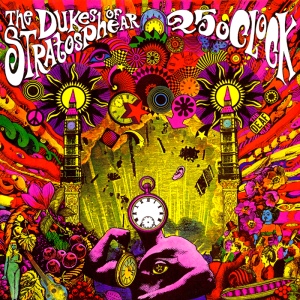
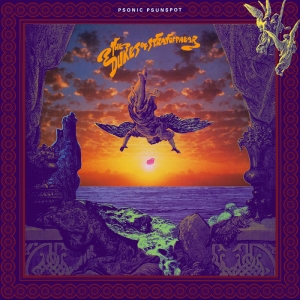
the Dukes of Statosphear - Chips From the Chocolate Fireball Anthology (1985-87)


A snappy little two-album anthology of the ultimate psychedelic nostalgia here, as performed by Sir John Johns and his merry band of toytown travellers - better known as New Wave songwriting geniuses XTC.

The neo-psychedelia tag is a misnomer really, seeing as the Dukes of Stratosphear's output was that of a loving tribute to the anni mirabiles of 1967 and 1968; no doubt the fruits of swollen record collections and weed-fuelled in-joking. Partridge & co's moment of indulgence is in fact so complete that were it not for the slight giveaway of John Leckie at the boards, one could be fooled in to believing the Dukes were a great obscure band of the psychedelic era, and no doubt this was their intention.
Fans of that fertile period of ambitious songwriters will absolutely lap up this little experiment; it comes out as a seamless amalgam of all your favourite 60's drug music, at times sounding exactly like a lost Beatles album from between 'Sgt. Pepper's' and 'Magical Mystery Tour', at

others recalling the frenetic paranoia of the Pretty Things, or staples like Tomorrow and Art. The 1985 mini-album '25 O'Clock' is perfection and the '87 full-length 'Psonic Sunspot' literally has nothing wrong with it either - the only downside I can see is if you aren't all that fond of 60's psych, but then why the hell are you even breathing?
Andy Partridge demonstrates a great ability throughout to mimic the clichéd effects and studio trickery of the era, whilst utilising his characteristic songwriting ability to keep things awesome. He has plenty of fun with the lyrics of course, the late 60's being one of the most ripe-for-parody in the history of pop. Special mention must go to 'Bike Ride to the Moon', which is like a tongue-in-cheek version of 'My White Bicycle':
Why not bring a pot of tea / On a bike ride to the moon? /
Angel cake for you and me / On a bike ride to the moon
.
What's not to like?

Within this multi-coloured tea chest lie nestled some of the best songs XTC recorded in the studio-only part of their career, in my redundant opinion. In short, I be your witch doctor and 'Chips From the Chocolate Fireball' is what I prescribes.

Friday, 14 August 2009

John Coltrane - A Love Supreme (1965)

Whilst it's immensely difficult not to regurgitate a puddle of wiki accolades about 'A Love Soup-Ream' being 'generally regarded' as this and that; it's NOT immensely difficult to tell you that this is the best (well, one of the top three interchangeable) jazz, if-not-just-album albums of all time. This is what ALL jazz should have sounded like by 1965. Coltrane by this point had dropped hard-bop like a bad smell, a regime where the improvisation was restricted to the chord changes within a tune.
ALS is, according to a certain source, modal jazz. I am a layman but even I can tell this is so, with my lugholes. Modal jazz was like the next step to the misleadingly-named free jazz (aka musical masturbation) that Coltrane would spend the last few years of his life exploring. Since this form is often not completely 'free', let's just call it avant-garde jazz. Anyway, ALS only skirts this territory, and is a culmination of the new freedom that improvising within modes allowed. This requires great skill on the part of the soloists, since you have to know your scales and be really quite ingenious to come up with something as timeless as the Coltrane Quartet did here. Coltrane had been testing this methodology since at least 'Giant Steps' (a fringes be-bop classic that I'll upload), but on here you will notice a marked difference to those oldies. Recording this album, one of the greatest saxophonists of all time still had his audience foremost in mind, and that's why Coltrane spares us an outdated form of improvisation without disappearing completely up his own arse.

John is the bandleader of course, and in case you hadn't worked it out, plays tenor saxophone. The rest of the quartet for this beast of a session runs as follows:
Jimmy Garrison - double bass
Evlin Jones - drums
McCoy Tyner - piano

This is a no-frills 320kbps upload, remastered but minus the tiresome five discs of 'bonus' material ('ooh an alternate take! WOW').
If I can practically hum the entire four-part suite of this album from memory, then it's well within the realms of possiblity that other people will enjoy it.

Only known performance of 'A Love Supreme'. Hardly any footage survived, and it was apparently more dissonant that the LP rendition.

Thursday, 13 August 2009

Lives of Angels - Elevator to Eden (1986)

Though Lives of Angels are were associated more with minimal synth/coldwave (I did discover them when I was on my coldwave quest, after all), there are readily apparent psychedelic elements as well, which makes for an unusual, unique sound. Their only LP was 1986 release Elevator to Eden, which appears to be hopelessly out-of-print, and all current linkage is corrupt or dead...until now! (recommended if you like Joy Division / New Order, Siglo XX, the So Young But So Cold compilation, Blank Dogs, and so forth):

Elevator to Eden (obscurity level: super-high - just around 200 listeners on Last.fm!)

They also appeared on 1988 compilation Colour Supplement (which you can grab at MUTANT SOUNDS) with three tracks that are absent from their one album, along with songs from Modern Art, Mystery Plane, and WeR7, and their MySpace Music page contains some more recent recordings.