Thursday, 16 September 2010

Love and Surgery: Victor Lovera sampler

I tried to pare this down, I really did, but it couldn't be done with a clean conscience. So here you have a 10-song sampler of the work of Victor Lovera, a Nashville-based songwriter and muse/sometime creative partner of R. Stevie Moore, who, as anybody who is familiar with this WEBPAGE or its author will know, is by far my favourite one-man musical tornado.
Lovera was, from the evidence on this Moore-compiled double album of his songs, an arch-druid of mostly contemplative and personal minor-chord songs; at least in his later recordings chronicled here - he began with Moore in possibly Nashville's only hard rock/glam/Zappa-influenced group Ethos and could do a mean power pop.
I have never truly been a connoisseur of singer-songwriters, so it takes something really special to get me hooked (here the awkward, uninformed attempt at musical analysis); and Victor had a great ear for a satisfying chord change and a calming voice, paired with a feel for classic, universal lovesong lyrics and, yes, a goddamned sense of humour.

His more playful uptempo numbers are good fun, whipping out the assisted high harmonies, but for me these home recordings will always recall a sense of kinship, sorrow and mystery; seen, as Lovera is by the limited Youtube audience, as a disheveled and peripheral figure in the RSM lifelense - a streaming artistic audiovisual feed of sorts stretching back some 35 years. This feeling can be summarised neatly in the multi-part camcorder document of Lovera's visit to Moore's New Jersey home in 1991 - it was the song 'Gleason', below, which first caught my attention.


I believe that these days, amongst all the web-paradigms, they'd call this user-generated content. But there is something sincere and candid in the almost unselfconscious home tapes of the pre-spiderwebs generations.
Lovera's maudlin demeanour, which I am speculatively romanticizing, is no doubt partially explained by the unfortunate fact that he was a sufferer from Crohn's disease, which tragically claimed his life in '98. In place of any sense of injustice at the non-exposure of thousands of such worthy artists (LoveraMoore foremost), I merely count myself fortunate to have encountered these people and their music in my virtual travels. Could VicLo ever have imagined that people as far flung as the grey skies of Norwich UK would be shuffling around with his songs on their iSplod on an autumn's day?


The songs included are taken from 'Love Lovera, Last Victor', available for $$$coppage here and only here (near the bottom). They are mostly home recordings from the mid-80s to the mid-90s. Amongst them, 'It Sparkles' is 1996's latter-day classic (RSM rearrangement here); 'Jackie' reminds me of the intro to Love's 'Laughing Stock'... what can I say about the rest, they are just heart-rending and whimsical songs by a ''real down-to-earth cat''. Enjoy!

Additional and essential material
Mice paces:
http://www.myspace.com/victorlovera (links through to dozens more)
http://www.myspace.com/stethos Ethos (Lovera & Moore)

The compilation sampled here constitutes just a small part of Victor's output; he was in many other bands and it's all chronicled and sold through Steviehub. Here is the main page from which you can navigate through a plethora of info http://www.angelfire.com/nj2/cdrsmclub/3/vl/victor1.html

Thursday, 3 June 2010

Can’t recommend this enough, one of those real delights you'd rarely unearth on purpose. The compilation consists of recordings from the 1930s golden age of rebetika/rembetika - urban underground music. This was the music disaffected Greek refugees from Asia Minor brought back with them, and boy… True to its origins, the Byzantine modes and unresolved structures give the style a strong Middle Eastern feel, but that doesn’t really cover it. The musicianship is impressive, intricate, often deceptively simple, and it still feels very Balkan, i.e. wistful as a troupe of wand'ring gypsies. These songs are ethereal when excised from worldly distractions and, as it turns out, made for stoners by stoners; which goes some way to explaining the disorientating side effects - even by today’s 'ethnic music' standards, where obscure and alien sounds issued from the dusty vaults are a dime a dozen.

Rebetiko is a folk style, and thus the tracks range from what I am informed are laments of woe to vital celebrations that make you want to dance badly, smash a few plates and drink copiously at a Mediterranean wedding reception... Ironically, my Greek ladyfriend hates it (too Turkish). She adds: ''rembetika originates from the verb 'remvazo', which means be lost in thoughts/absent-minded''. How apt!

Opa!

Below is a stonking BBC documentary on rebetiko, vintage: 1988.


Wednesday, 14 April 2010

Fugazi 'Red Medicine' (1995)


The most eclectic and unconventional sounds of the post-hardcore variety. Words seem pointless here, plus I ain't got the brain for many.
Luminary of the great Washington D.C. scene Ian MacKaye leads us throo noise rock, Beefheartized punk, downbeat instrumentals, a distant reggae flavour (scratchy guitar lines, 'Ring The Alarm' reference on track 7?) and some of the best dual guitar work you'll hear this side of... Slint or Sonic Youth, I suppose. Former members of Rites of Spring (who also featured in this D.C. 'supergroup') see to that, and Picciotto's vocal earnestness counters MacKaye's classic pubescent punk growl perfectly. Almost in-credibly good. The wheels were removed at some point and these guys just decided to clear their own way, off the beaten path. Even the faintest animal tracks seem to have been eschewed in favour of... this ... Checkit out. Gotta love dem righteous Fugazi/Dischord business/performance ethics too! And to think we were mired in Britpop.

As a bloke on the Boobtubes comments: ''Genres are for fucing books. This is music.''

Sunday, 21 February 2010

REVENGE OF THE ATTAQUE OF TEATIME PSYCHOTROPICKS


Originally compiled for my friend Trix; a spiritual sequel to my 2007 'Teatime Psychotropics' compilation of transatlantic 1960s psychedelic pop. A few non-UK/US groups. Mostly obscurities. Goes from the baroque and whimsical to more garage rock-y in the second half. Contains the best cover of Tomorrow’s ‘Real Life Permanent Dream’ you will ever hear. Non-aficionados of the era should probably steer clear and listen to fucking Deerhunter or something.

http://www.mediafire.com/?ynt2ey2kgdy

1. Scarecrow’s Love Affair - Blues Magoos
2. Time Track - Skip Bifferty
3. Life Is Short - Billy Nicholls
4. What Does It Feel - The End
5. When The Alarm Clock Rings - Blossom Toes
6. The Birthday - The Idle Race
7. Yo Recuerdo Mi Mundo - Los Shakers
8. 14 Hour Technicolour Dream - The Syn
9. Wake Up Cherylina - The Smoke
10. Real Life Permanent Dream - Orange Machine
11. Starvation - The Golden Dawn
12. Feathered Fish - The Sons Of Adam
13. The Letter - The Mops
14. Changing The Colors Of Life - Los Chijuas
15. All Night Stand - The Thoughts
16. 99th Floor - The Moving Sidewalks

Saturday, 6 February 2010

Enter The Magical Mystery Chambers (2009)


Every bit as awesome as you'd hope for. Unlike Danger Mouse's excellent Jay-Z/White Album mashup, most tracks here do not actually utilise Beatles samples as the basis for a cultural conflation. Rather, Caruana exploits obscure instrumental Beatles cover version: latter-day RZA-like horn motifs blowing soulfully away on Macca's 'Live and Let Die', a Hammond organ riff on 'And I Love Her', or at one point, oddly, a surf instrumental to the tune of 'You Won't See Me'... Cheeky and potentially disastrous, but it works. The overall quality of produckies is high, Caruana is an ace mixer who fills in the gaps inventively; and the Beatles seem little more than a convenient melodic device for a hip-hop redux. Cause let's face it, they were a hook factory.
The rhythmic instincts and sometime 'lyrical esoterics' of the Wu are carried through, but given a new lease of life with fresh beats that merely happen to be reappropriated from Thee Hoali Beetles canon. It's a hardcore hip-hop album first and foremost.
Vocals are lifted from not just Wu-Tang tracks but also the respective members' solo careers, it's gloriously l-o-n-g, the Beatles/Ol' Dirty Bastard skits are classic (heareth) and it's freeeeeee. Or at least it was until the bandcamp.com profile got taken down. Haw haw.

Click the picture above before this shit gets removed by the EMI attack dogs!

One of the few instances of extensive Beatles hook-sampling, this one from 'She's A Woman' with a Ghostface Killah vocal overdubbed:


Dedicated to the late, great Dirt McGirt. If there is a heaven he is up there getting wrecked.

Friday, 5 February 2010

That Motown Sound


A cottage industry that was churning out 110 Top Ten hits like nobody's business between 1961 and 1971; whose productions possess a timeless-yet-nostalgic quality that reduces music snobs and casuals alike to a quivering heap; that was Motor City's largest export after automobiles (and certainly the more culturally significant); to which generations of musicians and songwriters are indebted; the soul/R&B Mecca-Eden and the driving force behind the Northern Soul 'pre-rave' phenomenon in the UK...
What pop music witchcraft is this?
That's a question which I as a lowly music fan am not qualified to answer, but here's a succinct passage poached from that ever-questionable academic resource the Wikipaedos:

Motown’s music was crafted with an ear towards pop appeal. The company specialized in a type of soul music it referred to with the trademark "The Motown Sound". The Motown Sound was typified by a number of characteristics: the use of tambourines to accent the back beat, prominent and often melodic electric bass guitar lines, distinctive melodic and chord structures, and a call and response singing style that originated in gospel music. In addition, pop production techniques such as the use of orchestral string sections, charted horn sections, and carefully arranged background vocals were also used. Complex arrangements and elaborate, melismatic vocal riffs were avoided; Motown producers believed steadfastly in the ''KISS principle'' ("keep it simple, stupid"). Read the rest as you listen, fascinating stuff!


Great, but it doesn't satisfy my affinity for pointless comparative analysis... Ever seen a classic Martin Scorsese movie, noticed his tendency to big, upbeat orchestral soul? That's one aspect of Motown Records. In fact even in the incredibly unlikely case that you've never even heard of Motown, you will definitely have come across at least one of the songs included here during your lifetime; it will take a cattle prod to the withered memory bits o' your brain - as if you're revisiting a long-forgotten childhood... via the gift of ECT.

It's just that 60s magic to some extent, that is: the clean-but-not-over-processed-to-tawdry-shit analogue production, the guitar sound, the characteristic effects and instruments of the era; but it's also the Motown THING. Is it in-house session musician icons the Funk Brothers, the stock songwriting teams (which included flagship singers like Gaye, Robinson and Wonder)?; or is it simply the perfect combination of time, place, passion and inspiration? Probably... What do I know.

So, not to be missed. Should you even consider yourself something of an expert on the classic single-oriented era of Motown, this'll still knock you for six - 38 tracks! But it goes by in a flash, there is plenty of space for the less familiar stuff and each song retains an unmistakable identity. Despite the classic Motown remit outlined above there is considerable variety - check out the gritty, psychedelic garage stomper below!... The total euphoric effect of all this is something like a whirlwind. They truly had pop music down to a science.


...But there's one catch which I have to apologise for. I acquired this in 2007, and it served as my official introduction to a bedrock of popular culture that had somehow been omitted from my upbringing. Unfortunately the mp3s are in 128kbps. I've scoured the blogosphere and online retailers, but nothing matches the title... this first-class delight of a compilation is likely some blogger's one-off. To some people this won't make a difference, but to the rest of you I would still implore you to take the dive.
On the plus side, the occasional dodgy high-ends in the sound neatly replicate the experience of listening to the songs through a transistor radio on the kitchen table in 1966, or dusty old vinyl. If you can find a collection on a par with this in better quality... you are a better man than I, and you should share the wealth in the comments box forthwith.
cheers, J x

Partario Wun
Partario T'u

(Tracklisting in comments)

Wednesday, 27 January 2010

Dalis Car 'The Waking Hour' (1984)

^A painting by Max Parrish, whose 'Daybreak' is the album's cover-art

A deeply unusual and beguiling one-off here (not me, the album). The delectable Peter Murphy of Bauhaus and multi-instrumentalist Mick Karn (ex-Japan) came together for this totally unique celebration of Middle Eastern modes and Paganistic themes; conjured almost entirely by complex, interwoven fretless bass and synth lines. With a number of exceptions, the fretless bass' sound can seem dated as it instantly recalls an era. But similar to the iconic and fluid basstones featured on Kate Bush albums from the period, it just feeds into the strangeness and in the case of Dalis Car, sets the scene.

Murphy was surely one of the classic post-Bowie New Wave singers, bold and brazen. Karn brings the dark, synth-based ruminations of Japan to the project. The programmed drums are barely noticeable and rendered almost superfluous beneath the album's mirage. This is far from simply Bauhaus meets Japan - it carves out a mystical exoticism, at a time when many artists of renown (Byrne, Gabriel, Eno etc) had recently succeeded in bringing the alien rhythms of various 'world'/ethnic musics into synthetic Western pop.

Dalis Car is pretty left of field however, being unsettlingly hypnotic and instrumentally upside-down. The minimalist approach to the compositions is fleshed out by excellent production and timely touches of distant guitar and woodwind. If you're a fan of the cold sounds of Talking Heads' Fear of Music, Bowie's Lodger, or the gothic New Age-isms of Dead Can Dance in general you can't afford to miss out on this.
BEWARE 'Cornwall Stone'.

the judgement is the mirror
1985 interview with Karn and Murphy


Themed Mix - Bellydancing-ish


Ohh...it's been quite awhile since I last posted something to Substix. Or made a mix of any sort for that matter, so today I bring you Bellydancing-ish, which is a mix with the objective of bringing together tracks which could potentially be suitable for the purpose of bellydancing - many could be said to be 'arabesque' or Indian-tinged, while there are also tracks which simply have a somewhat avant-garde rhythm and beat which coincide with the theme. Dead Can Dance and Siouxsie are often considered staples for "gothic belly dance", while Ofra Haza is probably the closest to legit bellydance music - everything else I was going on my own intuition and possibly practice. Onwards!

Cover art is taken from Josefina - Nico Nelson on Flickr (a Creative Commons image).

Various Artists - Bellydancing-ish

---Tracklisting---
1. Siouxsie and the Banshees - "Follow the Sun"
2. Shocking Blue - "Love Buzz"
3. Nine Inch Nails - "14 Ghosts II"
4. Damon Albarn - "Reedz"
5. Danielle Dax - "Timber Tongue"
6. Beastie Boys - "Eugene's Lament"
7. Ratatat - "Mumtaz Khan"
8. David Bowie - "Yassassin"
9. The Who - "Disguises"
10. The Fall - "Theme From Error-Orror!"
11. Koji Kondo - "Marina Research Laboratory"
12. Danielle Dax - "Ostrich"
13. Ananda Shankar - "Dance Indra"
14. Siouxsie and the Banshees - "Silly Thing"
15. Ofra Haza - "Im Nin Alu"
16. Dead Can Dance - "Indus"
17. Nico - "Into the Arena"
18. Siouxsie and the Banshees - "Lunar Camel"
19. Koji Kondo - "Lethal Lava Land"
20. Dead Can Dance - "The Ubiquitous Mr. Lovegrove"

Sunday, 24 January 2010

V/A - The Beginner's Guide to Thrash Metal

Presented here for your pleasure is a sterling and succinct introduction to the original thrash metal movement, by one of my favourite music fans on the web and stalwart/sugar daddy/patriarch of the Musicbanter forum. Thrash was initially a California-centric scene but was quickly indebted to the East Coast and Western Europe in particular; with bands surfacing worldwide like Brazil's influential Sepultura. This compilation not only covers the greatest bands of thrash that are perhaps lesser-known to casual listeners (i.e. not the Big Four), but it carries great import as the root of just about all the metal that would come in the ensuing decades.
Here's a thorough documentary-retrospective of the whole thing (stream works as of 24/01/10).

What follows is the comp as it was presented on the forum in June '09.


This is more of an introduction to a genre and hopefully some of the younger members might like it and see where the multitudes of metal sub genres came from initially. Thrash was a massive shot in the arm for metal as the NWOBHM was burning out along came Thrash with it's Metal roots influenced by Punk and Hardcore. All the tracks on here are pre 1990 and I have purposely excluded the big 4 here ( Metallica, Megadeth, Slayer,Anthrax). I have also seen 7 of the bands live although that is just me showing off! enjoy please!

1. Death Angel-Evil Priest
Recorded in '86 and released in '87 this bay area band are one of the most influential bands in the Thrash scene and not bad for a drummer who was only 14 at the time! lyrically this is bloody awful cliched crap but that bass line in the middle and the subsequent accelerating guitar riff is nothing short of stellar.
2. Vio-lence-Phobophobia
If you are wondering it's fear of fear! Vio-lence never really got the attention that they deserved probably due to Sean Killians vocal style which many found ill fitting amidst their razor sharp riffs. This track has plenty of riffs jostling for attention yet it is still streamlined and tight as! Guitarist
robb flynn went on to front a little band called Machine Head!
3. Testament-Burnt Offerings
Outside of the big 4, Testament were always the fans favourite and it could be argued that theirs is the quintessential Thrash sound. Again lyrically terrible, it makes up for that in the twin guitar muscular riffs and it remains a Thrash classic.
4. Sepultura-To The Wall
For many the band never recaptured the raw power of their second album Schizophrenia from which this track is taken and this awesome track backs that up. Brilliant raw production
and the stupendous drum work of Igor Cavalera make this another absolute classic and not nearly heralded enough amidst the bands later success's.
5.Kreator-Stream Of Consciousness
Always one of the rawer bands in the Thrash fraternity and a band that's live power has never been captured well on vinyl at all which was a shame as the efficient riffing and vocal power of Mille Petrozza has always given Kreator a unique sound. Love the openeing riff that bounces off the bass
drum pattern.
6.Sabbat-The Best Of Enemies
How I love that intro with the bass guitar and double bass drum punctuated with that guitar riff. Sabbat where always a band not quite of their time and if they were around in the 70's i swear that they would have been a Prog band! Musically they were very different from the usual sound and employed lots of time changes and unusual vocal techniques. Dreamweaver is another album that needs reappraising.
7.Mortal Sin-Mayhemic Destruction
Mortal Sin were unusual due to the fact that they were from Australia (hardly a mecca for Thrash) and the fact that they were unashamedly old school thrash. The same titled debut album suffered from bad production and the band fell into many cliches on the album. However this track showed their potential and really cements it's place here with it's change of pace and awesome riff that kicks in at 2:50. It remains one of my favourite Thrash riffs ever.
8.Dark Angel-No One Answers
The main stop start riff on this track is still absolutely fucking mental and still sounds heavy as hell even today. Dark Angel began life as a cliched speed/Thrash band dabbling in the usual Satanic/morbid lyrics but they changed tack with this album. Lyrically very powerful. It dealt with child abuse and it's devastaing effects on the young. It's a shame about the faster parts as the production cannot quite keep up with the band and it sounds a little murky. That riff is still worth it. Amazing.
9.Meliah Rage-Impending Doom
A bit of a cheat here as Meliah Rage were essentially a power metal band that jumped on the Thrash bandwagon and occasionally on their debut (from which this is taken) reached some great heights. The track is built around a number of excellent riffs and changes in pace that wa
rrant it's inclusion.
10.Nuclear Assault-Brain Death
Epic.Epic.Epic. Although Nuclear Assault took their influences from Punk and Hardcore, the first 3 albums are beloved in Thrash scene and the bands ability to keep that raw edge coupled with Dan Lilkers ridiculously fast bass work made them a live favourite ( I managed to catch the band twice in 4 days in different cities and I managed to hang with them on the later date). This track is worth it for the brilliant middle section that begins at the 3:40 mark and is a perfect send off for my intro to ya all!


Thursday, 21 January 2010

Megadeth 'Rust In Peace' (1990)


Well, this has been a long time coming. You can find this on a thousand blogs with the click of the mouse, but if I'm to share my favourites then it would be dishonest to omit Rust In Peace.

RIP is considered to be the album where Dave Mustaine truly got his revenge on ex-bandmates Metallica, by producing an album that was faster, more complex and more political than anything they could ever manage. It is also inarguably the apex of thrash metal (a California-born meeting of punk rock and heavy metal of the early 80s) and contender for the greatest metal album of all time, in any subgenre.
To the uninitiated - i.e. those who have no interest in 'The Metal' - this may well just be the same old noise, but I defy you to test it and not appreciate the musicianship and compositional skill involved.
I've never been a metalhead per se, but I find extreme metal subgenres therapeutic, thrash metal in particular has the speed and density, and is the primary language of the headbanger. In the 80s this was the perfect antithesis to dumb/hedonistic, poodle-haired AM metal... although as you can see above, painful trousers and effeminate coiffures remained.
Neither have I ever been one for instrumental virtuosity and guitar histrionics for the sake of it, which makes my appreciation of this album all the more special.
The thick-and-fast solos of dual guitarists Marty Friedman and songwriter/frontman Mustaine on Rust are never tedious; it's as if they agonised over every note. It's incredibly progressive, with time and key changes that leave you reeling - for a classic example see what happens around 2:48 on 'Hangar 18'. 'Holy Wars' is a breakneck suite and two-pronged reflection on religious fanaticism and crusades - the sort of track that may have happened had old prog guard been born in time for the hardcore punk movement and the First Gulf War!

... And I will hold up my hands and admit that some of the lyrics here are f*cking awesome. There are the occasional, obligatory/corny ones about wizards or Satanism; but this is thrash metal so the main points of order are grinning fascists, government wars, obliteration, conspiracy, social control, religion - nothing that far removed from reality, really.
I always thought the intentions of the 'Big Four' bands of thrash (Anthrax, Megadeth, Metallica and Slayer) were sound; taking a firm anti-war stance and calling out hypocrisy and corruption - albeit in a ham-fisted manner - and often extending this into the realms of farce for our tongue-in-cheek enjoyment.

MERCY KILLINGS
Classic interview

Saturday, 9 January 2010

Death 'For The Whole World To See' (1975)


Recorded by the three brothers Hackney in 1975 but bafflingly left unreleased until last year, Death (not to be confused with the equally trailblazing death/technical metal pioneers of the 80s) left us a mere 7 songs, but what epic and prescient statements they were!

They started as an R'n'B outfit before changing tack - embracing hard rock and the proto-punk of other Motor City originals like the Stooges and MC5 - whilst, to my ears at least, retaining the soul and social conscience of early 70s African-American music.
The result resembles a sound at once like Bad Brains and hardcore punk five years before the fact, with an unmistakable Detroit groove barely contained in a strait jacket of outrage: that of social outcasts trying to comprehend the senseless prejudice and apathy of the world around them. If this all sounds a bit too angsty and sincere to you then you'd do well to remember that this is rock music and getthehelloffamypage.
Now, the Bad Brains comparison isn't just some handy euphimism for all-black (so-called Afro-punk) groups of the 1970s, but one for the political approach and wide range of moods that both bands evoked over the majority of their peers within a raw punk framework. The album begins like any other Detroit garage group, presaging the Dirtbombs et al. Track 2 is spookily H.R, or even the 'black New York Dolls' Pure Hell. However the songs hereafter become lengthier, incorporating time changes and introspective lyrics; there are echoes of Curtis Mayfield's funk, the soul and rhythmic gospel seemingly compulsory for Detroit and even the jaded 1970s psychedelic hangover.


Ahead-of-their-time cuts like 'Let the World Turn', 'You're a Prisoner' and 'Politicians In My Eyes' ought to have reached the nascent punk subculture and become bonafide classics, but they didn't. Death self-released one 7'' single - these recordings having been funded by Columbia Records - and were swiftly dropped after refusing to compromise with a friendlier band name. Now is your chance to hear what a generation missed out on.

Alb'm
Afro-punk doque

Tuesday, 29 December 2009

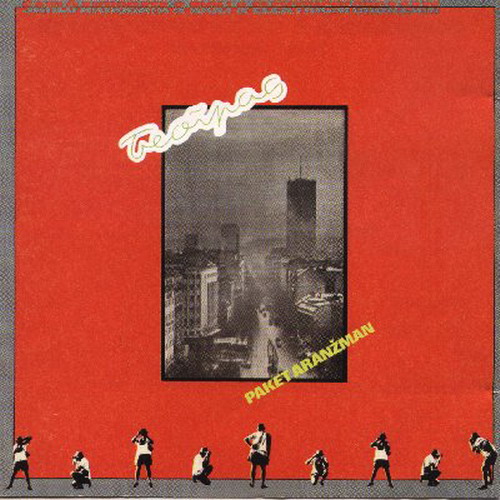
Various Artists 'Paket aranžman' (1980)


I love the energy of this album - it's taut and (I think it's safe to say) political like a lot of post-punk, but all the more worthwhile for the harsh social conditions under which it was produced. For all the gloom of the Eastern bloc, these groups sound like they were having fun, and the short but flawless career of Šarlo akrobata (of whom I am a big fan) exemplifies this: occasionally ska-inflected bursts of punk-inspired expression that would make for an interesting socio-historical study.
Šarlo clearly share their art school sensibilities with English contemporaries like Gang of Four, Wire et al; but if you had grown up in an environment shrouded behind the Iron Curtain, I think you might have more immediate priorities than artists in the 'free' world - who more often than not are met with a wall of conditioned ignorance or apathy. There is a sense that this is music that is truly reflecting a heavily oppressed generation that, having been spurred by the anarchic freedom of the punk movement, is struggling to not only free but to find itself and its role in this strange limbo-world.

This urgency in the music, occasionally tempered by bleak resignation, invokes all the usual Cold War imagery I somewhat romanticize in my head, so this little summary could only be positive coming from that perspective... And Paket aranžman is as perfect a snapshot of a time and place as one could hope for. However I think for the post-punk connoisseur and Europhile there is more to be had here. Only the three foremost Yugo Rock groups are featured, but they cover a lot of ground and only leave you dying to know what the lyrics are saying, particularly in Idoli's passive 'Amerika' (are they cynical, reverential?). The New Wave/Two Tone movements had obviously taken hold in Serbian record shops, the kids were doing the jerk to Costello, XTC, the Specials and producing music with the same tight rhythm sections and jagged guitars.

Here are some sample videos to help give you some idea of what these guys thought about life under leaders who were little more than Soviet puppets... note the mocking of Sov social realism in Idoli's Maljčiki video. SHOW PAPERS AT CHECKPOINT.


Sound wise, it's not 'lo-fi' in the conventional sense, some songs are endearingly ramshackle but no worse than a typical penniless Western group making do with a cheap studio. The difference here is that the music mattered. It mattered to a youth mired in the conflict and prejudices of their parent's/grandparent's generation - both Soviet and internal. It is scant comfort to know that things were only going to get worse - events of the ensuing decades would claim the lives of a few of the musicians featured on this record, including the drummer and frontman of Šarlo Akrobata.

Wiki:
'Paket aranžman is a New Wave music compilation album released in 1980 by Jugoton and is one of the most important and influential records ever made in the former Socialist Federal Republic of Yugoslavia. It features the eminent Belgrade artists: Šarlo akrobata, Električni orgazam and Idoli. Along with Novi Punk Val and Artistička radna akcija it is considered a symbol of the Yugoslav New Wave era and still has cult status in the countries that emerged after the breakup of Yugoslavia. The album was voted the second best Yugoslav rock album of all time by the critics. It is second only to Odbrana i poslednji dani by Idoli.'

LINK: http://www.mediafire.com/?2k2jzyyegur

Friday, 27 November 2009

Янка Дягилева 'Стыд и срам' (1991)


The definition of a 'lost' classic. Russian 'punk poet' Yanka Dyagileva's sorrow is beautiful and heartbreaking. The dissonant rumblings of cheap electric guitar introduced here on some tracks makes this, like all 'final statements', prophetically unhinged and disturbing. The foreknowledge of her spiralling depression, alcoholism and the increasing bleakness of her lyrics haunt the listener throughout.

This short album is bookended by painful exorcisms, 'Выше ноги от земли' and 'Придет вода'; both are lengthy songs with more than one passage, and both transmit an indescribable angst (especially if you don't speak Russian), although these titles should give you some idea: 'The Water Is Coming', 'Higher Than My Feet Above the Ground', 'Of Devils'...
Cracked lullabies, a recurring broken music box and an endearingly shambolic delivery reflect an innocence lost, never to be regained, and the sort of fatalistic, self-destructive philosophy that permeates the art of those under the Mighty Red Boot. We are even treated to a minute or so of Yanka's *swoon* spoken word and *gasp* an organ solo!

The title translates as Styd i Sram, or Shame and Reproach, and is Yanka's final self-released record before her suicide in Siberia, in 1991, within months of recording these songs.
In Soviet Russia you were simply not allowed access to studio facilities unless you were bland, state-authorised un-music. Yanka's vagrant lifestyle, travelling around Russia in collectives playing to the counterculture crowd, was the only means by which a dissenting artist could make themselves heard - at grassroots level. As such the Russian political folk underground was largely inspired by Bob Dylan and other Western minstrels, as well as rock 'n' roll and other impassioned forms of music that were frowned upon. Indeed, many of Yanka's contemporaries faced arrest without trial (and in some cases even torture) for their stance.

To those in the know, Стыд и срам is a punk-folk classic, although parallels could be drawn with the concurrent grunge and lo-fi scenes emerging in America. However none of those artists knew anything of the true tyranny, cultural suppression and hardship that Yanka did; and the melodies bear no resemblence to anything Western.

It's such a shame there has been no comprehensive translation of this bohemian heroine's lyricbook, as the folk-poet element is lost on non-Russian speakers... But if you are interested there are dribs and drabs of information, and all her home-recorded albums and bootlegs are free to download here: http://store.yanka.lenin.ru/mp3/Prodano!_89/

Shout to Proskynesis for introducing me to this a while ago.

Thursday, 26 November 2009

The POWDERED COWS AND THE TOY THROAT ALARM CLOCK - s/t (2009)


Right, a bit of a break from the norm here as this is not an album share; but I've included a few streams for you to peruse whilst you deliberate on taking the monumental risk of actually paying FIVE POUNDS for an excellent record by a lovely person whom, in all certainty, deserves the money.

Powdered Cows is the solo alias of multi-instrumentalist songwriter Martin Roberts, resident of the rolling hills and sweaty crevices of Dorset (this is an important factor as we shall find out).

Compared to the playful noise-jazz chaos of one of Martin's many group projects, Skitanja, the Powdered Cows output is predominantly of the introverted, reflective indie-folk variety. I'm crap at hearing lyrics, but based on the artwork and song titles this album is inspired by very late nights and the 'blissed-out' (as a friend recently put it) atmosphere of the countryside in the South West. It's my belief that the closer to nature you are, the closer you are to the essence of life, and this is reflected in the Powdered Cows listening experience, which is quite ethereal. 'Descent From Animals'.

From track to track the permeating sound is hushed and reverential, even when things take a darker turn it's as if Martin were staked out at 3am with Bill Oddie, waiting for a badger to emerge from its burrow. These references to nature shouldn't be misread as New Age philosophy either - think more along the lines of British Sea Power, a pastoral Englishness and celebration of peaceful life, with a dash of spirituality.

A lot of work has gone into the production, and each track is layered with instruments, synths and samples of all kinds: woodwind, strings, trumpet, drum machine, accordion, toybox, to name but a few. It's the sound of a musical collector bringing his toys out of the loft to play.
But what really ties this record together for me are the sound samples and the hissy gramophone-like effect on many of the tracks. We hear birds crowing, what sounds like pattering rain throughout 'Eyes of Knives', radio static, a kick-drum that almost recreates the sound of a record skipping on 'Little Red Lilly Beetle', and a denouement that, appropriately, reminds one of the 'Lonely Man' theme...

Every song is legitimately catchy, but it's easy to overlook this amidst the homespun, secretive ambience of the album, which is only punctuated in the first half by Angus Rudd's driving drumwork featured on such tracks as 'Hidden Tapes'. This actually rocks in a subdued, post-punk way and is one of my favourites on here; with an intro that sounds like a processed organ feeding back, and a highly satisfying Doctor Who tone in the chorus.
The Doctor Who tangent might also take us, by way of the BBC Radiophonic Workshop (also featured here) to the 21st century's Ghost Box label and its esoterical manifesto of mysticism and the paranormal; a thread that I feel Powdered Cows picks up on, at least in spirit.

Hear some tunes, and possibly purchase them. http://www.myspace.com/powderedcows
Last.fm, free downloads. http://www.last.fm/music/The+POWDERED+COWS+AND+THE+TOY+THROAT+ALARM+CLOCK

Friday, 13 November 2009

John Frusciante 'Niandra Lades and Usually Just a T-Shirt' (1994)

Resykld:
Who would've thought the popularity of the Red Hot Chili Peppers (whom popular opinion holds to be a gaggle of gurning, shirtless Californian twats with a few conversely great LPs to their name) could be indirectly responsible for an album like this?: A home-recorded double album of avant-garde, dissonant demons ('92 & '94 respectively) by guitarist John Frusciante. This is up there with other shadow flowers like Oar and the Madcap Laughs, except even more abstract in its style. Whereas Skip's music was a schizophrenic mess and Syd was just shot-away, Frusciante is not of that generation, and through the 90's was an extremely reclusive, emaciated crack and heroin addict with his head tightly screwed on and free of whimsy.

The songs/instrumentals are warts-and-all, frequently detuned, almost ignore melody (but not really) and sound as if they were written/recorded on the spot, freeform. If this spontaneity was the method, Frusciante's four-track tape machine (my favourite recording tool incidentally - because it forces you to make the most of the little space available) captures and preserves these moments of torment uninhibited. These recordings do not answer to gravity, they have their own laws and operate in an emotional and musical vortex. If you have experienced such a vortex or are capable of stepping into one, then you will 'get' Niandra. And no, you don't need to enjoy his group work, Frusciante has his own muse.

Listening back to this album by a physically withered, disintegrating individual, it seems miraculous that Frusciante managed to emerge the other side of the 90's; and go on to use his considerable talents to forge a decent solo career... but he'll never write like this again. He escaped the vortex, stepped through a waterfall, and today explores a different kind of spirituality. For all their macho sex-funk and Hendrixising, the Chili Peppers' constituent members cite an eclectic range of greats for influence, and Frusciante would go on to make some excellent, introspective and ambitious music off the back of post-punk/new wave/krautrock obsessions.
On Niandra however there is no trace of this later polish, it's a totally unique and isolated document - on its own planet musically and deeply personal, achieving a sort of metaphysical junkie plateau. The mistakes are left in, and anything resembling a pretty song is quickly ravaged with psychedelic tape effects and everything from tormented howls to banshee screams (made even more inhuman by occasional pitch-shifting). It's sad, ugly and beautiful.
When he finally rejoined his old group in 1999, cleaned up, Frusciante had lost all his teeth to infection and received extensive skin grafts for needle abscesses. He also suffered severe burns after his crack den burned down. Ladies and gentlemen:

I (Niandra Lades)
II (Usually Just a T-Shirt)

Remarkable 1994 interview and the only press Frusciante did during this period

Song from the album
Example of latter-day oeuvre

Thursday, 12 November 2009

Einstürzende Neubauten 'Zeichnungen des Patienten O. T.' (1983)


Here the Berlin group, led by the positively demonic Blixa Bargeld, expands its sound, underlying the metallic clatter and grating noises of the first album with something resembling a pulse (quite literally, on one track). The disturbing, minimalist sound still reigns but it's much more textured and varied this time around; O.T. is one of those albums where you will have it on in the background and mistakenly think you have been through half of it, only to check the tracklisting and find you've been listening to but a single epic composition. This progression is one reason I consider Neubauten's 80's period to be great.

We are not in the territory of conventional songwriting yet, no choruses or verses are here to give you a tether into popular music or safe familiarity, this is the world of Collapsing New Buildings - the constant disintegration and perpetuation of disposable modern structures (ideals as trends, cultures, powers-that-be, people?). You might say that musically and lyrically Neubauten are deconstructing it all themselves, but I think they had aspirations to destruction as well:
'I am waiting on the edge of the world for the new sun which burns more than it shines /The president howls at the grave of the HMV dog / And the newsreader bears his honest as bones face / The station ID, a blow on the bones.'

A few aspects of the broadening and deepening of the Neubauten sound, which has a resonance different to that of the masochistic appeal of the debut:
- synth burbles, circuit buzzes and static that provide a lower register to the found-sound ambience, which are fleshed out with a wider range of objects being struck/plucked/scraped etc
- at least twice the number of tape tracks (seemingly) in use, with several dedicated to analogue sampling and field recordings (a Hamburg fish market being one, apparently)
- occasional use of atmospheric, Central African-sounding woodwind and percussion, even dissonant strings ('Armenia')
- found sounds like water, animals and, erm, race cars...
The eclectic whole makes perfect sense as a coherent, continuous record, with an atmosphere so beautifully executed yet brooding and malevolent it probably belongs in a 'scariest albums' nerdlist. Has to be heard to be believed!

The album title means 'Drawings of Patient O.T.', O.T. refers to this man and gives you some idea as to the darker themes of the album, and perhaps Bargeld's growing sense of isolation from the world. Most of us may not be able to understand the lyrics, but this is not essential, especially when the music is perhaps a most effective narrator that often threatens to drown out Blixa's tortured exultations and improv. Not to detract from his talent as a vocalist (which is part of what defines the group) however, but it is a presence less dominant on this album.

I wanted to include a stream of a standout track, the neo-classical 'Armenia', but can only find live versions which have a totally different sound.
You can hear snippets here, but bear in mind that the tracklisting's messed up the so 'Armenia' isn't 'Armenia': Drawings of Patient O.T. – Einstürzende Neubauten – Listen free and discover music at Last.fm

Saturday, 7 November 2009

the Chrysanthemums 'Little Flecks of Foam Around Barking' (1988)


The finest psych-pop/double-concept LP to come out of 80's underground Britain, and certainly the best album ever made in Leicester. Crucially, the Chrysanthemums were a collaborative effort between two great unknowns: Terry Burrows (better known as Yukio Yung) and Alan Jenkins (he of Deep Freeze Mice and Cordelia Records); our beloved R. Stevie Moore is in there somewhere too - in fact it's the spirit of deadbroke musical ambition and penpal tape exchanges that glues it all together. That and the ever-amusing absurditastic lyricks.
Alan Jenkins' weirdness and deadpan noo wave non-sequiturs are here in spades; and channeled through Yung's reliable pop know-how and eclecticism (his fascination with Japan and Germany has resulted in some top releases, some of which you'll find @ MutantSounds) give us the magnum opus from these sadly anonymous heroes.
The only way it could possibly be any more perfect is if we got to hear Jenkins' befuddled croak, and you, as a music lover, are now obliged to blog search Deep Freeze Mice and have a good old nibble.

It's probably worth mentioning that in a brief GesichtBuch photo comments box exchange I had with Burrows (really), he expressed his dissatisfaction with the mastering of the album. And whilst it could certainly do with more range and punch, I think you will be too busy having your brain cells rearranged by the CD rip presented here to give a toss. A dearly beloved album in my collection, enjoy or die!

I II

More info here, including transcript of R. Stevie Moore's top notch sleevenotes...
... And here an inadequate video I made for 'He's Had His Bears'.

Friday, 6 November 2009

Jello Biafra 'High Priest of Harmful Matter' (1989)

Ex-Dead Kennedys frontman's second spoken word album, recorded (presumably) during his speaking tour of US universities. He's an articulate and rousing speaker, with important messages to impart - if Chomsky's stoic mutter sends you to sleep then look no further. It's a 20 year old album, so there are one or two dated cultural refs at the beginning; but the broader issues he raises will be all too familiar to the more switched-on younger listener. Some prescient, statistically-supported predictions are made that would later unfold, with consequences that endure to the present day...

3 tracks: one of 10 minutes, two more @ 45 minutes each.
Even if progressive politics and the real dirt don't 'appeal' to you, I'd highly recommend hearing this for the meat of it: Biafra's summary of censorship in America. He details the madness of Tipper Gore's PMRC (you'll never look at Al the same again) and the ensuing 'obscenity trial' brought against Dead Kennedys and the Alternative Tentacles label for the Frankenchrist album cover... In the pre-web era the breadth and depth of Biafra's research is quite remarkable - you actually believe what he's saying and, lo and behold, a cursory Google search will confirm. He's great at voices too and there are bittersweet laughs to be found amidst the tales of persecution and corruption.
Anyone who's familiar with Frank Zappa's anti-censorship efforts, testimony against the PMRC and this video in particular will find 'High Priest...' both fascinating and terrifying. I II

Black Flag 'Who's Got the 10½?' (1985)


Purpose

Roll call:
Greg Ginn - Mahavishnu improv-punk, dissonant garrote strings
Henry Rollins - Banshee razor throat, vox of conscience
Kira Roessler - Bump buh bum bu bump buh, (see album title)
Anthony Martinez (RIP B. Stevenson) - machine gun allfiller/timekiller

One of me favourite albums (and a live one at that!) period, been meaning to share it f'some time. Ripped from CD (how quaint!). Rollins didn't write any of these songs, but he is on form here, spitting fire and making every lyric his own - if you know the guy you'll know that they might as well have been.
I can't think of any other bands who provoked this white-knuckle rapture of tight-wound, late-night sobriety and damning isolation. It's violent catharsis. A band where the guitarist plays lead and rhythm simultaneously!
True, the post-Damaged era of Sabbath/free jazz-inspired sludgecore yielded some seminal albums that would essentially be responsible for the grunge movement (as I and the 'key players' see it) and an anti-scene vision/work ethic that goes above and beyond the narrow strictures of 'punk' of early 80's west coast US; BUUUT one might argue that the muddy/downright awful/yet-to-be-remastered (come on Ginn, ya c*nt!) production on most of those albums never truly represented the explosive/implosive experience of LIVE Black Flag.

1984's live effort, their only truly inconsequential record, was an example of just about everything going pear-shaped as a recording and as a poorly-mixed slab o' Flag.
Black Flag lived on the road, they played anywhere anytime and, by all accounts, always delivered. A performance band, then. See the Youchoobs for prüf. They developed their sound on the road and through the cassettes played on the van's tape deck. In this van Ginn wrote his lyrics, which set up camp behind Rollins' increasingly misanthropic and punishing thousand-yard stare. They saw The Shit all over and they called it, that's the young man's duty.

And since the Flag were a band that worked more live than in any other medium, thank ___ they left us with a perfect snapshot of their final peak; before the as-yet unexplained animosity of Greg Ginn towards Rollins could sever an already frayed and exhausted relationship. Personally I suspect it was a clash between Ginn's psychotropic use (hear it in the music, the 70's influence) and Rollins' heart-of-stone sober focus. Ginn's music after Flag was, unsurprisingly, mainly jazz fusion guitar jams.

But here on 10½ we gots all the innovations of 80s Flag: the fucked-up time signatures, the anti-solos, fronted by a caged animal, ever-lengthening hair... and the ability to conjure a leaden heart in three chords like no other band on earth. These were never your average L.A. punk wasters. As for more contemporaneous influences they were in good company on Ginn's SST with post-punk expansionists Minutemen, Meat Puppets... you can hear the soundemolitions of their beloved Einstürzende Neubauten in here too.
The extensive setlist is not slim on the old anthemiklassix either - there's the customary freakout stoner jam (what better way to stick it to the skinheads?) and medley, you'll love it if you have ears and any small measure of righteous anger.
I could write endlessly about this record, its relevance to me personally, its meaning to other musicians and how BF were one of the few that 'rose above' (hurrrr) the surrounding pond life-smegma of La-La Swamp. Are you sick of the swamp and its revolting fumes? You aren't the only one. Join yourself!

Sunday, 1 November 2009

Steel Pulse 'True Democracy' (1982)


My posts have been getting a bit oppressive lately, so here's something more buoyant and conscious. This record gives me butterflies and flashbacks to amazing sex that never happened. Here are ze opening and concluding paragraphs of my little brother's exhaustive review; 'True Democracy' made #5 in his 'top 100 albums' list back in April:

''I always find it hard to review reggae with sounding like some raddish who has no idea what he's on about but, nevertheless, I'll do my best to do this album justice - officially my favourite reggae album of all time. While I could just as easily call their 1978 debut, Handsworth Revolution, a classic (it is the album that got me into reggae music and all), Steel Pulse's fourth album here stands for me as the pinnacle of Birmingham reggae (don't even get me started on that joke of a band called UB40). To put this album into a bit of context, with their aforementioned debut, Steel Pulse had caused a few ripples in the music industry and had gained a sizeable cult following, and had even supported Bob Marley and Burning Spear on tour. They'd become known for using much more of a polished studio sound than their roots reggae contemporaries, as well as peddling very politically-motivated, anti-apartheid songs (it doesn't take much of an imagination to think what they'd be on about for a song called Ku Klux Klan for example). As yet, though, mainstream success had eluded them. In hiring legendary producer Karl Pitterson (who had albums such as Bob Marley's Exodus and Peter Tosh's Legalize It under his belt, as well as Steel Pulse's first two albums), the band attempted to find a more mainstream sound as well as, in lead singer David Hinds' words, "your earth-man style and your militant style". It's the best way to sum this album up in a stylistic sense. From the bare bones of the instantly-recognisable reggae backbone, True Democracy employs an eclectic mix of upbeat dance rhythms, political and social commentary and a state-of-the-art feel that sets it apart from the sound of contemporary Jamaican reggae of the day. It's mainstream yet militant, preaching yet unpretentious, and one of the absolute essentials on top of that.''

''Whereas their earlier work is just as meritable, True Democracy sees Karl Pitterson's production creating a much fuller and uptempo sound and, therefore, a much more accessible one. Such is the reason if I had to recommend one classic reggae album to someone who's never heard any good reggae before, I'd go with this album. Another reason it's impossible to hate this album is because, while softening their approach in order to gain a more mainstream audience, Steel Pulse still explore the deeply evocative, militant and thought-provoking lyrical matters of social and political commentary, with Hinds incorporating some unusual subjects into his lyrics. As well as all this, Pitterson's splendid production allows each band member (particularly percussionist Phonso Martin) to really stand up and make themselves heard. All these factors are the building blocks to a classic reggae album, and one I couldn't give enough praise. Brilliant album. If you've ever thought about getting into reggae but aren't sure where to turn, I recommend this.''